
Lots of places lay claim to being the buckle of the Bible Belt. I’m not sure which one is it, but my home town of Nashville, TN, is certainly in the running. As a result of living my formative years in a town with what sometimes seemed like a church on every corner and a father who became a born-again Christian following my parents’ divorce, I grew up with a certain perspective on what religion was all about. As far as I knew at the time, all religions were built around an all-powerful, vengeful deity who required absolute devotion to avoid an afterlife filled with torture.
And then came Thailand and my awakening to the idea that religion can be based not on worship of a deity but on adherence to a set of principles. The idea that the Buddha is not a god but a man who achieved enlightenment by living a life according to these principles – someone to be respected, most certainly, but also someone whose example can be followed to reap the same rewards. Failure to achieve enlightenment results not in an eternity of fire and brimstone but rather a chance to try again in the next life.
Now, to be clear, I don’t consider myself a Buddhist because (1) I don’t adhere to Buddhist principles in the way that I think someone who adopts that label should and (2) I’m not really a fan of organized religion in general. I think spirituality should be a personal pursuit.
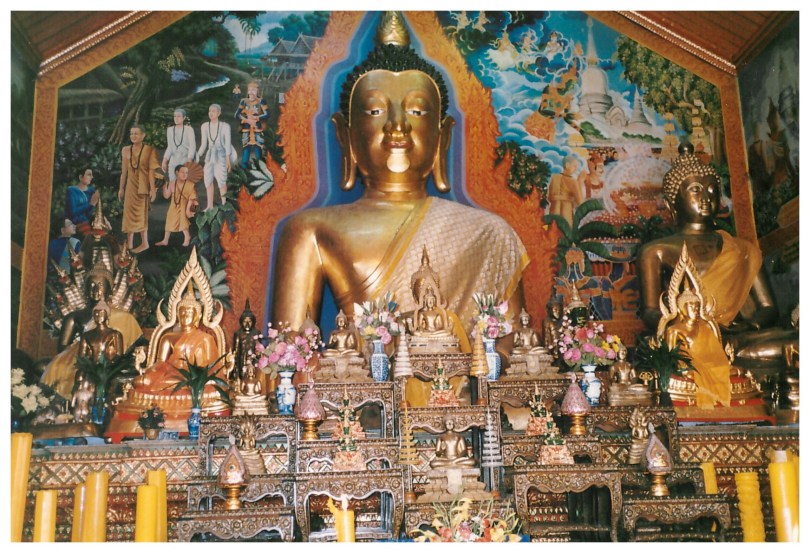
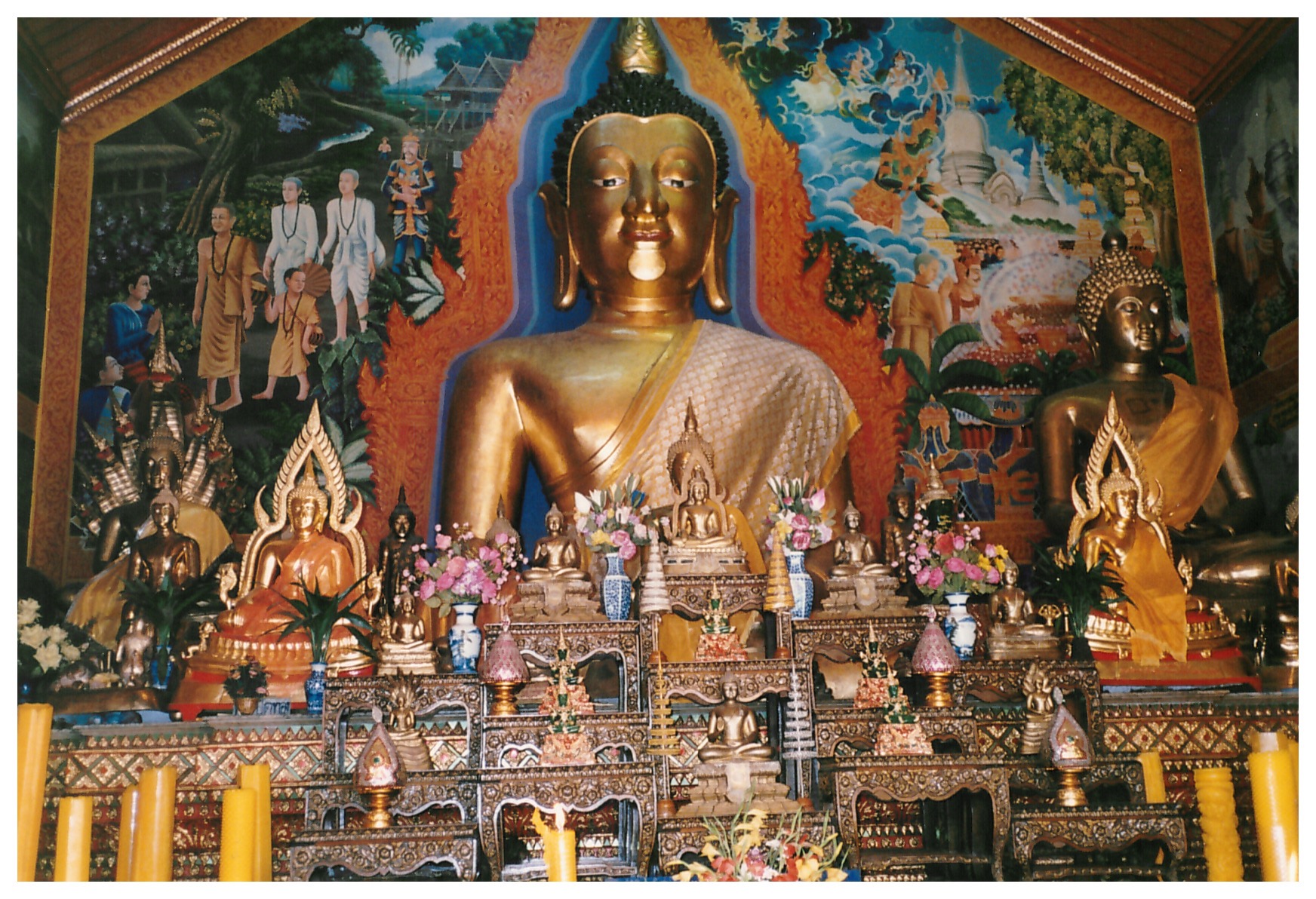
That said, I was captivated by the idea of Buddhism, relished seeing the images of the Buddha in statues large and small throughout Thailand, and bought the first of my own personal collection of statues of Buddha that I proudly display inside and outside my home. I even have a tattoo of Buddha on my left shoulder that I call “my external reminder that happiness comes from within.” Buddhist monks in Thailand today, where it’s common to see signs in English urging tourists not to buy items with images of the Buddha, would consider such a thing sacrilege: “Buddha is not art,” the signs’ headline says. I respectfully disagree.

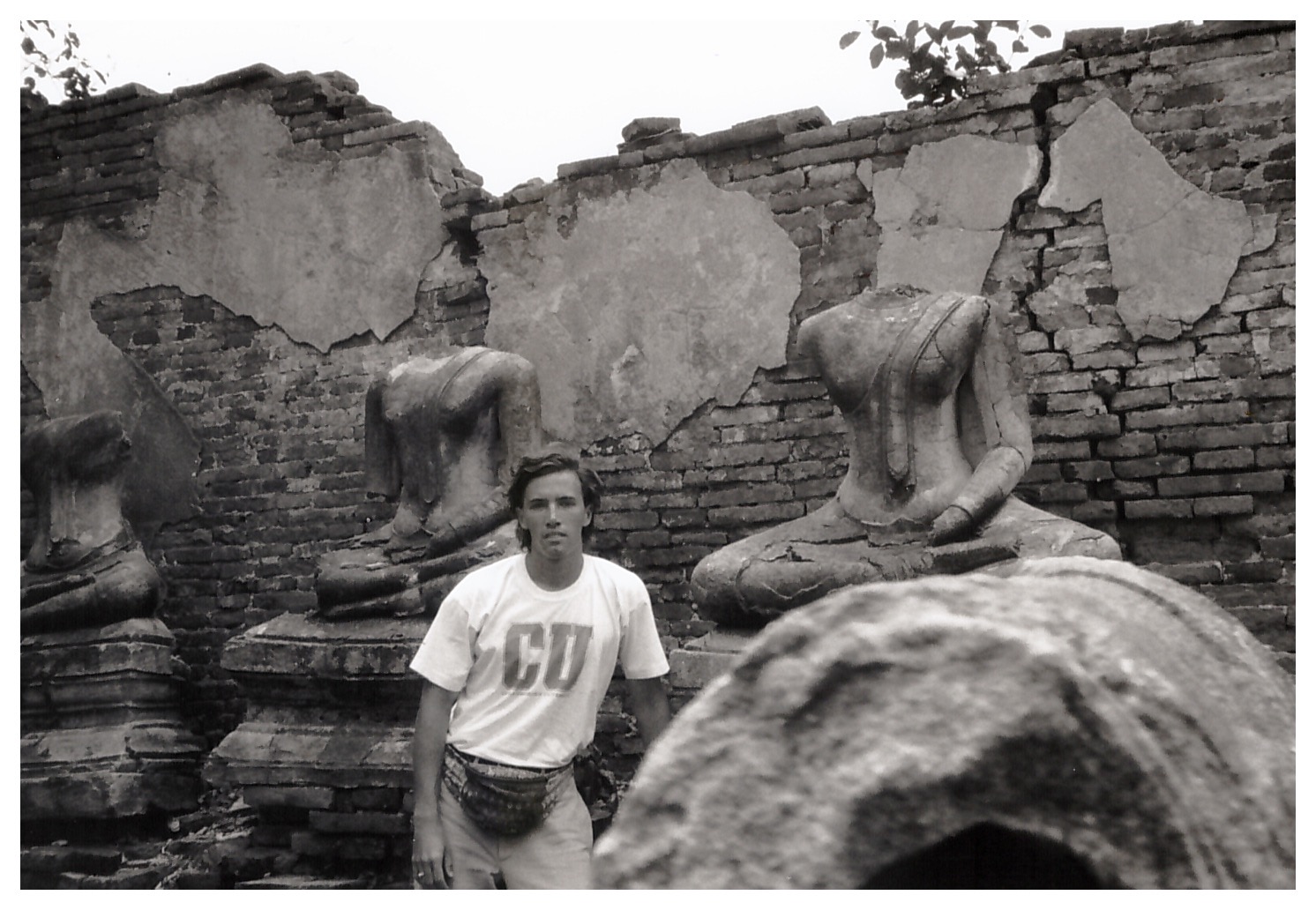
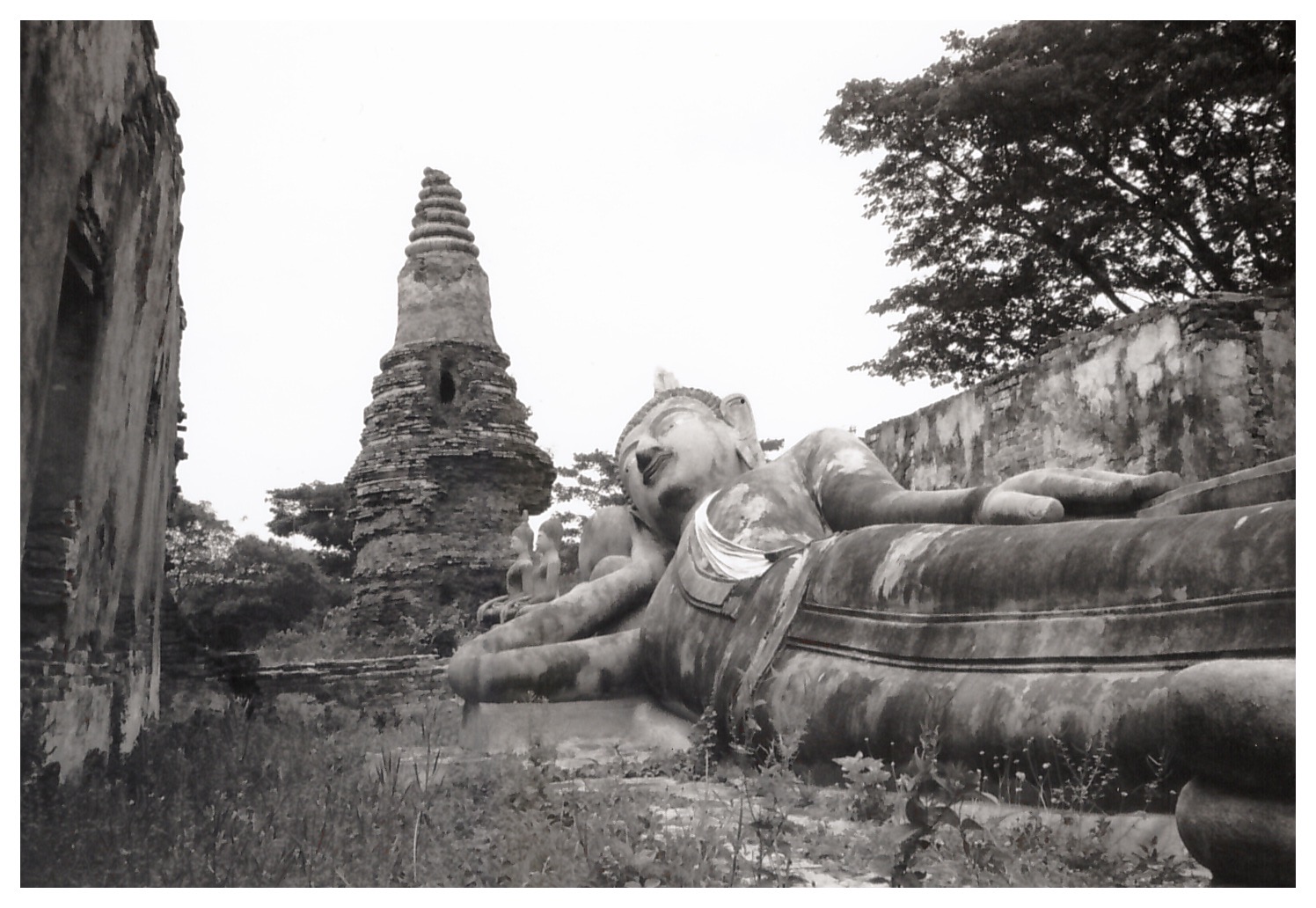

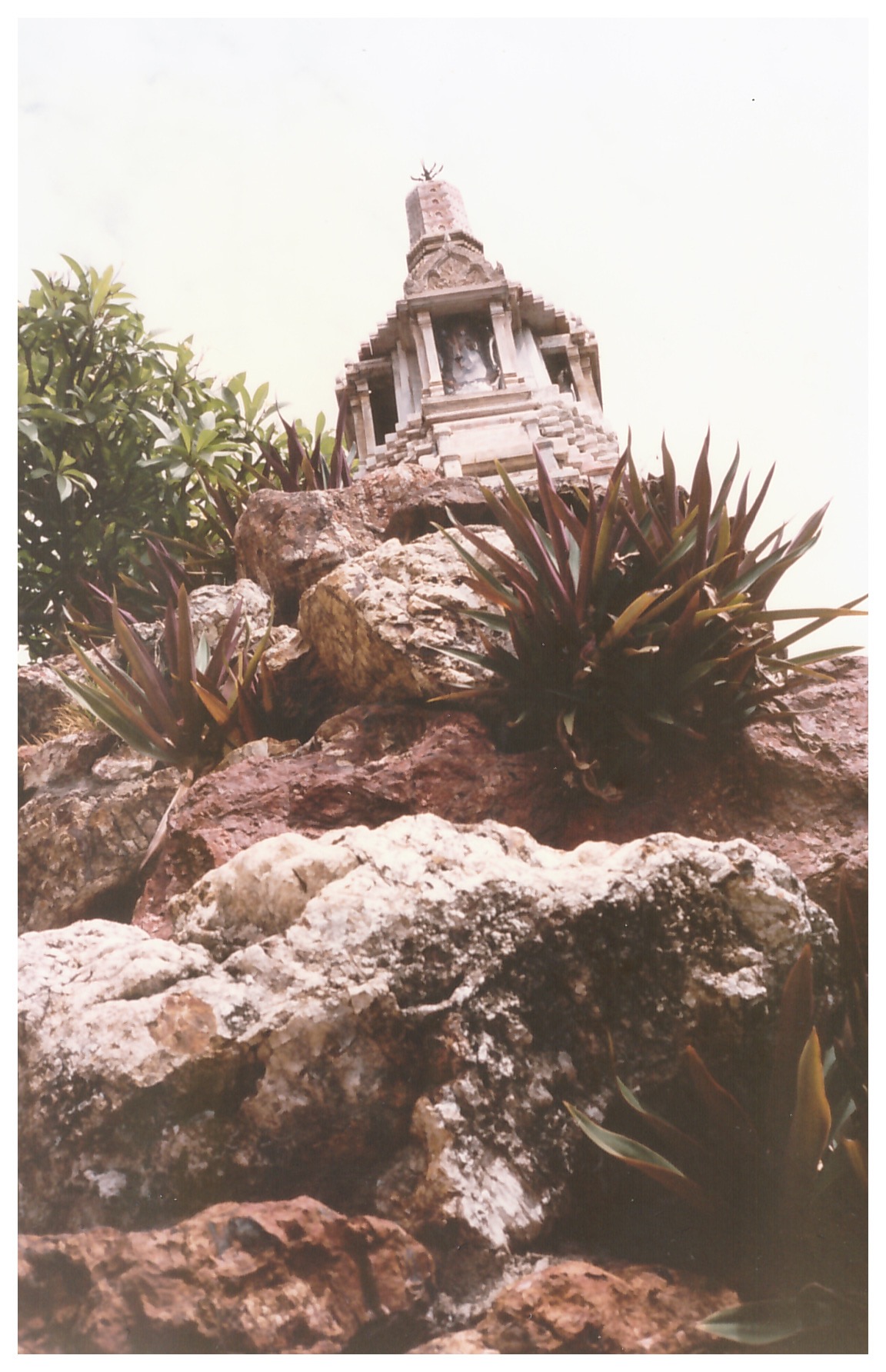
Like so many things about travel experiences throughout my life, my exposure to Buddhism and its stark differences with the religion I was most familiar opened my eyes to the fact that there are a myriad ways of living. I try to remember that it is not my place to judge one over another, but I’m not always successful in that.
Mark Twain famously said, “Travel is fatal to prejudice, bigotry, and narrow-mindedness, and many of our people need it sorely on these accounts. Broad, wholesome, charitable views of men and things cannot be acquired by vegetating in one little corner of the earth all one’s lifetime.”
I couldn’t agree more.
 X Nomad Life
Are you saying that Mark Twain is a Buddhist?! Haha! Thanks for this post. You put into words what travel can mean when seeking and when open to a broader perspective. Years ago on a trip to Angkor Wat, a tour guide showed me an ancient storehouse in one of the temples. In the past, if a king wanted his city to worship Buddha there were statues of Buddha ready to place at the corners of the temple. If a king wanted his subjects to worship in the Hindu tradition, Shiva Lingas were ready to place in the same spots instead of the Buddha. If the king wanted to give a choice, the king would have the Shiva Linga beside the Buddha. Politics made more sense to me seeing this storehouse. The modern storehouse has hundreds of philosophies and almost an equal amount of political viewpoints. What a complexity! I see the value of standing in nature where there are no symbols. Only the earth, plants, and sky that made us.
LikeLiked by 1 person