
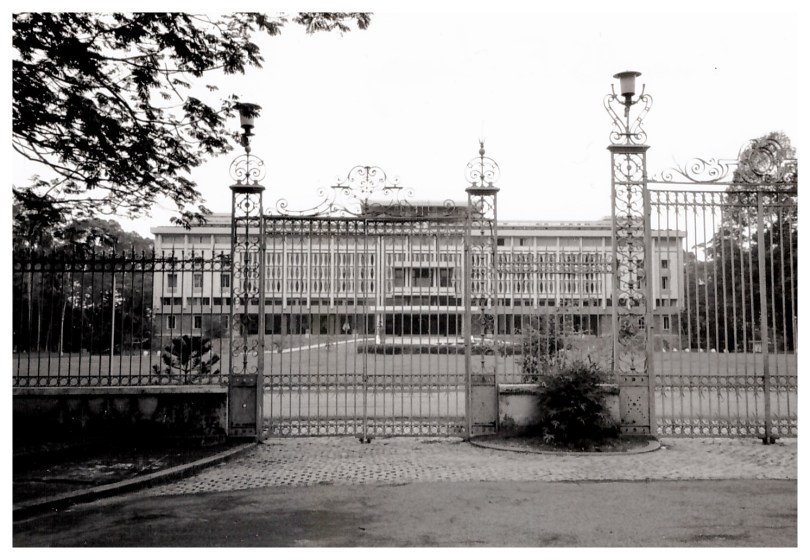
“How many Americans have been inside since the war?” I asked. “None??”
I was gob smacked.
Here I was, standing outside the former U.S. Embassy in Saigon in 1990, paying for a ticket the woman at the desk sold me after calling someone once she found out I and my fellow traveler were Americans. We were about to be the first two Americans back inside since that helicopter lifted off the roof with the last batch of diplomats in 1975. What?
Dr. Steinfatt, the professor leading the travel study program that had taken me to Thailand that summer, and I had learned on the taxi ride from the airport the previous day that no one referred to it as Ho Chi Minh City. At least no one who wasn’t a government official. To the residents, it was still Saigon. It didn’t matter what was written on the side of the dilapidated busses.
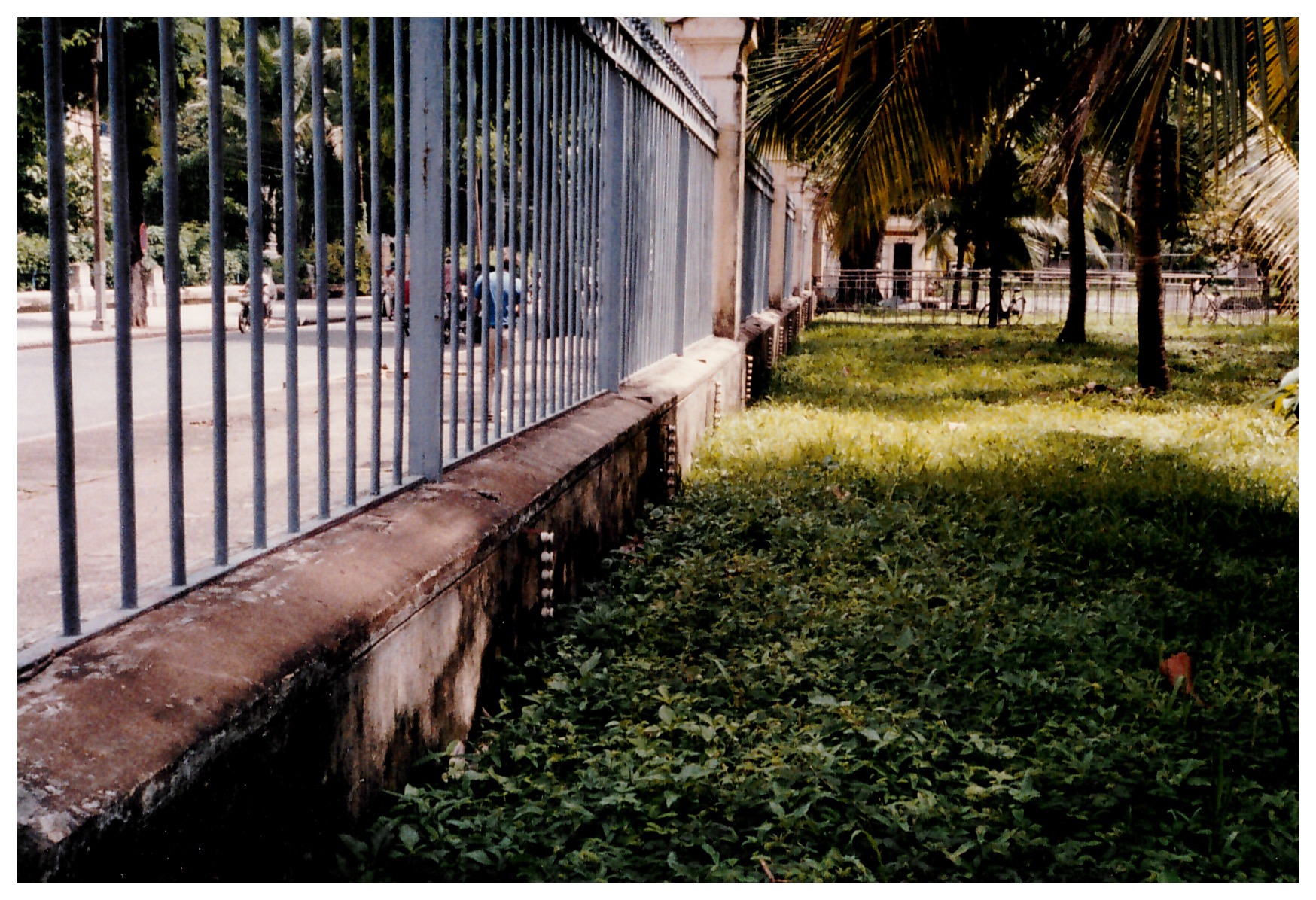
As we made our way to the hotel, we asked where the former US Embassy had been and were pointed to the official-looking building surrounded by the big fence that we were now standing outside of. We had walked over after breakfast to see if we could get inside and were delighted to discover a ticket booth. When we found out that they were opening to the public for the first time that very day, we went from delighted to thrilled. That question about how many Americans had been inside since the war was a doorway to the surreal.
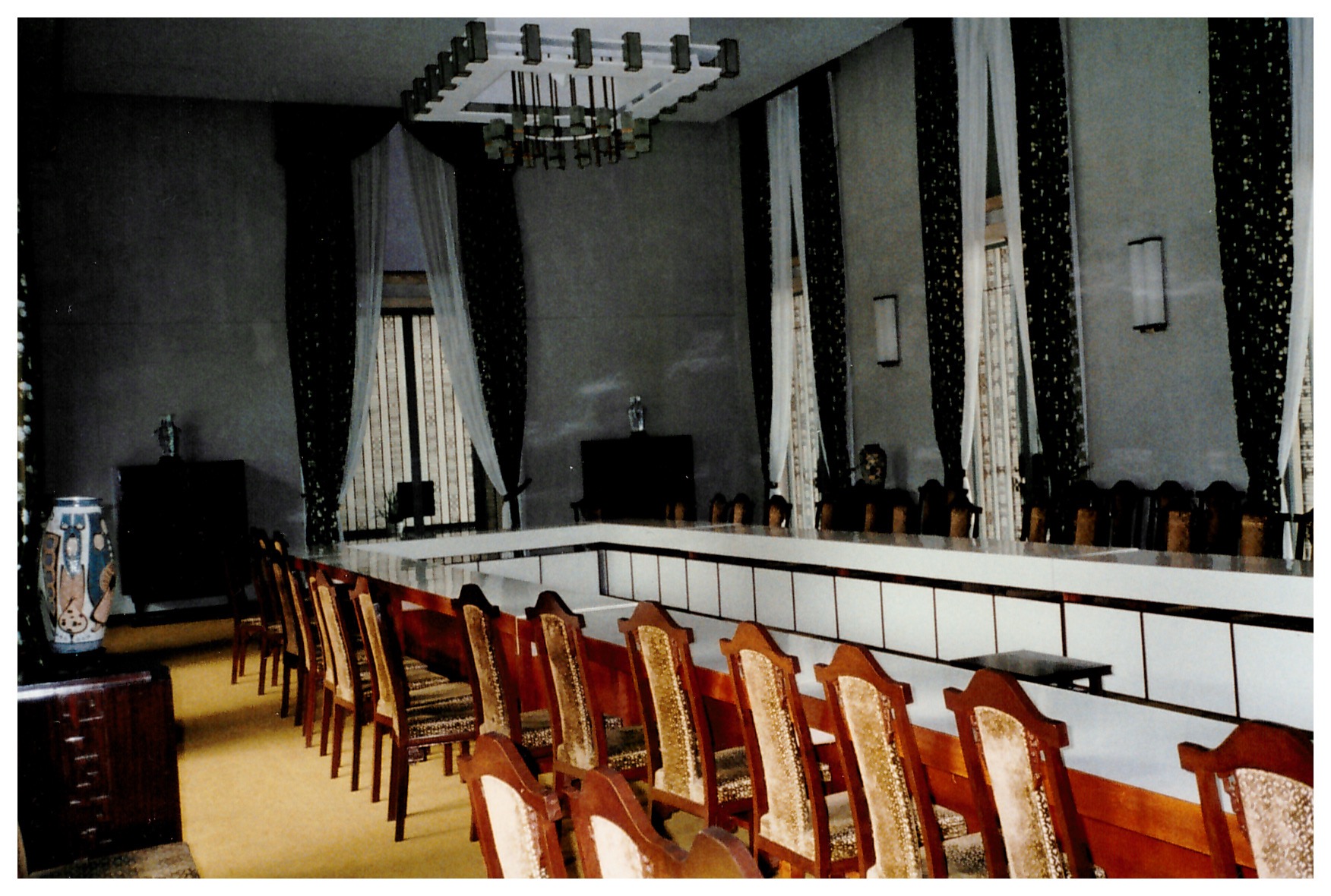
As we toured the building, learning that it had served as the headquarters of the organization that managed the oil trade between Vietnam and the Soviet Union in the years between the war and our well-timed visit, Dr. Steinfatt and I barely spoke. We were both in awe of the experience we were having, imagining the tense meetings and discussions that must have been held in the offices and conference rooms we were seeing.
And then we got to the top floor.
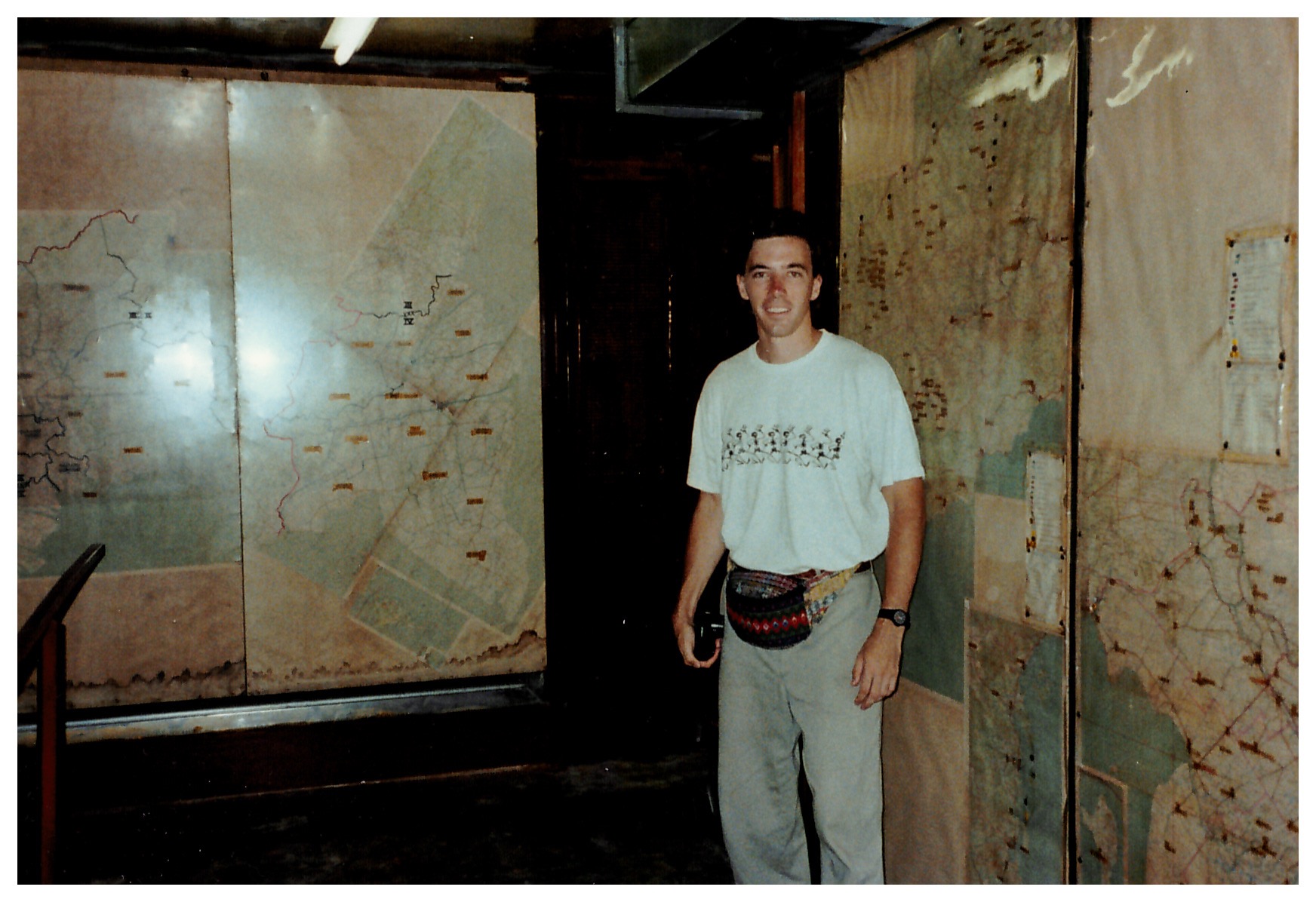
On one side was room with a video playing about the war and the ultimate victory resulting in the reunification of the country. On the other was the “war room.” Map-lined walls surrounding rows of ancient-looking communications equipment. I never found out if it had been recreated or left like that since the end of the war, in part because my eyes became glued to the flat roof visible through the glass doors on one side of the room. There it was. The scene of America’s defeat. I posed for a backlit picture that makes it hard to see the somber look on my face. Smiling seemed pretty inappropriate for that one.
A few years later, I had occasion to reconnect with Dr. Steinfatt to request a recommendation for the graduate school program I had decided to attend. “I still can’t believe we were the first Americans back in the former embassy after the war,” I said. “I must have told that story a hundred times since then.”
“Uh, yeah. About that,” he replied. “That wasn’t the embassy. I learned when I went back last year that the embassy was down the street. We never even saw it.”
It turns out that the building we visited – still as the first Americans back inside since the war – had been the seat of the South Vietnamese government. A historically important building for sure, but not at all what we thought. It seem’s that cabbie’s English wasn’t as good as we assumed.
Just when I thought that story couldn’t get any better! 😀


 X Nomad Life