
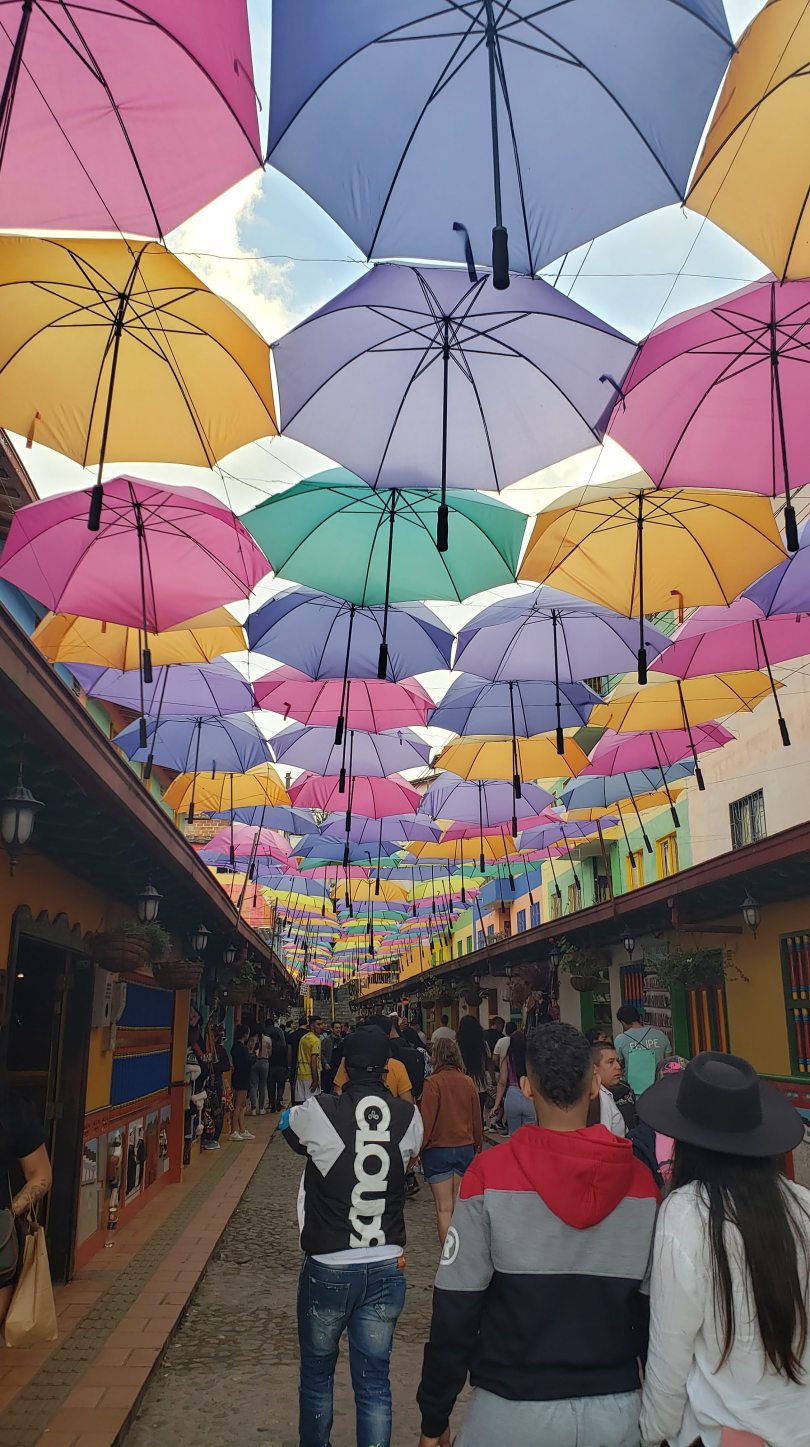
I think Guatapé is on every must-see list of sights if you’re in Medellín. You won’t get any argument from me on that. A friend and I went on a day trip a couple of weeks ago with Capture Colombia Tours, and we both enjoyed ourselves immensely.
As with every trip outside Medellín, the day started with a winding climb out of the Aburrá Valley that nestles the dense metropolis toward our destination, approximately 45 kilometers (~28 miles) due west. Of course, the Antioquia region of Colombia contains no even remotely straight roads from what I have seen so the driving distance is more like 77 kilometers (~48 miles).
After a 90-minute drive, our first stop was Réplica del Peñol, an memorial to a town that was wiped out when the government decided to flood the area to create the Embalse del Peñol, the sprawling hydroelectric reservoir that covers one third of Colombia’s electrical needs. Although the story of the loss the residents felt when their town was destroyed pulls at the heart strings a bit, the replica feels like a tourist trap. It’s a convenient place to go to the bathroom and get a snack, but the little chapel is skippable. There’s also a multi-room gift shop crammed with over-priced, mass-produced souvenirs where they encourage visitors to have their photo taken in an upstairs window in a sombrero and poncho placed nearby for that explicit purpose. They stress the fact that you can borrow the costume and take a photo for free. If cultural appropriation is your thing, you won’t be alone. Our van full of liberals seemed to be the only ones not taking part.
For me, the most interesting part of this first stop was not the attempt at forced nostalgia at the replica but the cross rising out of the water in the reservoir nearby. The cross marks the actual location and height of the steeple of the original chapel of the town before it was flooded. Seeing that landmark produced the empathy for the loss that the replica failed to bring forth.
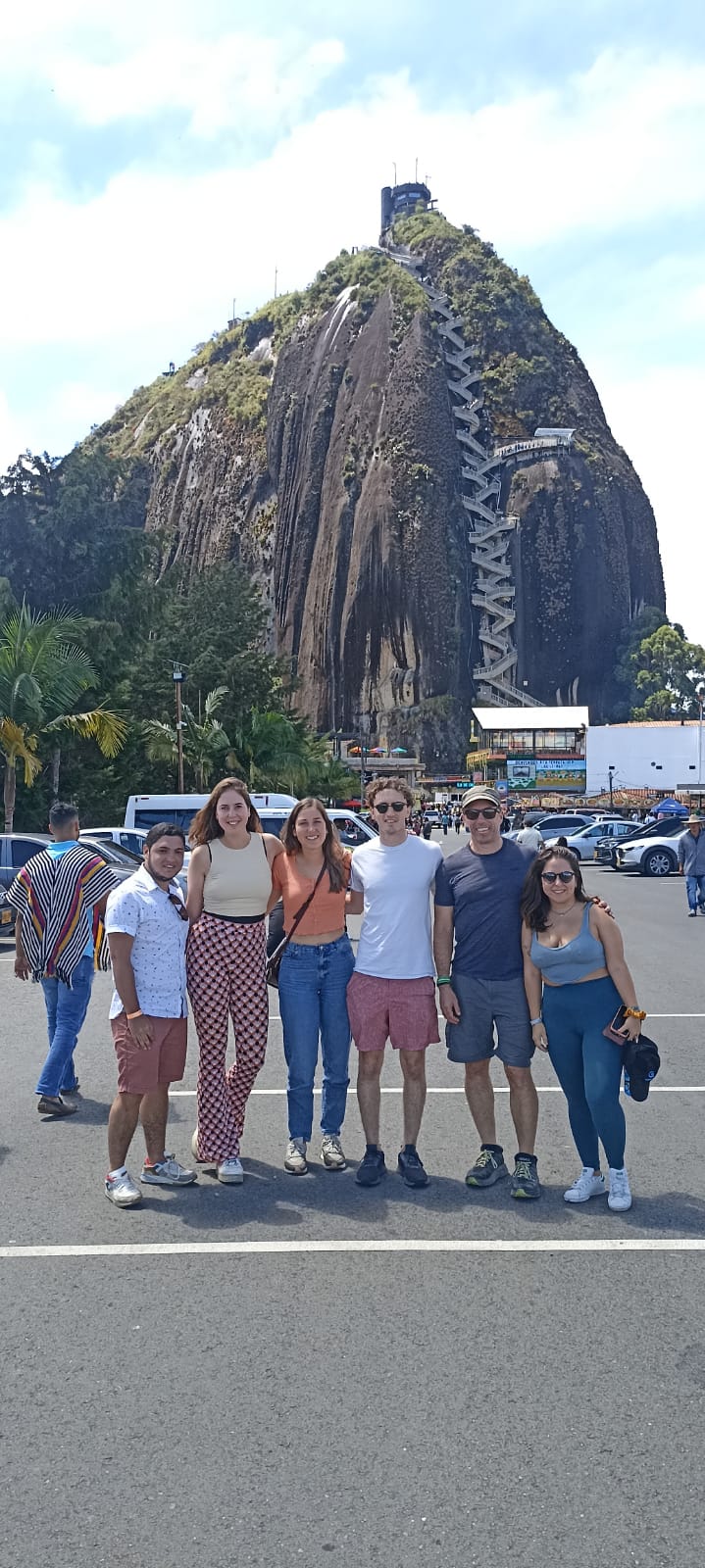
From there, the day got much better. The next stop after another 15 minutes or so of travel time was Guatapé’s main attraction, Piedra El Peńol, also known as El Peñón de Guatapé or The Rock of Guatapé. This monolithic outcrop towers 200 meters above its base with 700+ steps you can pay to climb to the top of, including the tower they decided to build on top, because obviously 215 meters is better than 200 meters. Plus, you can put a gift shop in a tower.
While researching this landmark to remind myself of details like its height, I discovered a major discrepancy between what the tour guide told us about it and what’s on Wikipedia. According to Capture Tours, this big-ass rock is owned by one, now very wealthy family after their patriarch (Peñol) bought it for one peso back in the 1950s. As the story goes, he built stairs up one side, becoming the first person to scale it, see the potential, and set up a ticket booth at the bottom.
The Wiki version of the story is that three men (Luis Eduardo Villegas López, Pedro Nel Ramirez, and Ramón Diaz) spent 5 days climbing it in 1954 using sticks fixed against the rock’s wall. Wikipedia’s entry comes with a citation from a book at the History Museum in Guatapé so I’m going to have to give that story the edge over what the tour guide said. The wiki article goes on to tell a funny story about a dispute between the towns of Guatapé and El Peñol over the ownership of the rock, which Guatapé tried to settle by painting the town name on the side in giant letters. They only got the G and part of the U done before being stopped by “a large mob” from El Peñol. LOL. Just shows that people are nuts everywhere.
Anyway, the climb up the stairs was worth the trip and not all that taxing if you’re accustomed to hiking. If not, you’ll want to take a break or several on the way up. The stairs are steep, winding, and not all of equal height, a good reminder that U.S. building codes don’t apply everywhere. There are separate stairs up and down, however, so you don’t have to worry about dodging those on the descent. Once you get to the top of the rock and then to the top of the tower, the view of the lake is stunning. It snakes its way into hundreds of inlets and around dozens of islands formed by the rolling hills and winding valleys of Colombia. You can’t really see how much shoreline there is in the lake unless you see it from high above, like in this map view.
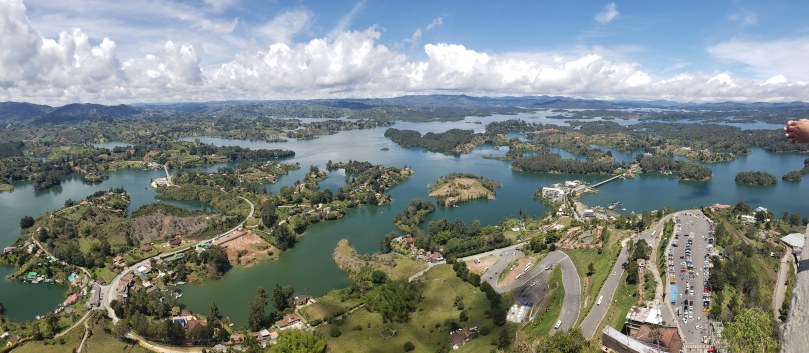
Since I mentioned how much of a tourist trap Réplica del Peñol is, it’s probably only fair that I point out how touristy the Rock is. The base is littered with gift shops, snack bars, and restaurants, and the top of the rock has its share as well. The descent from the tower routes you through a gift shop, and there are a couple of snack bars with shaded seating on the rock itself.
Our descent was much faster than the climb up but slower than expected because of people taking the steep, narrow steps at a slower pace than my friend and I could have managed. After piling back into the tour van, there was another short drive through the town of Guatapé to a way-off-the-beaten-path lunch spot. I don’t think you can really call it a restaurant. Getting there required the van driver to back his way about 200 meters down a dirt driveway to a rural home with an all-you-can-eat buffet spread of 10-12 dishes plus fresh juice and a homemade orange cake. All the food was delicious. It was a charming, unexpected treat that I give Capture Colombia Tours high marks for.
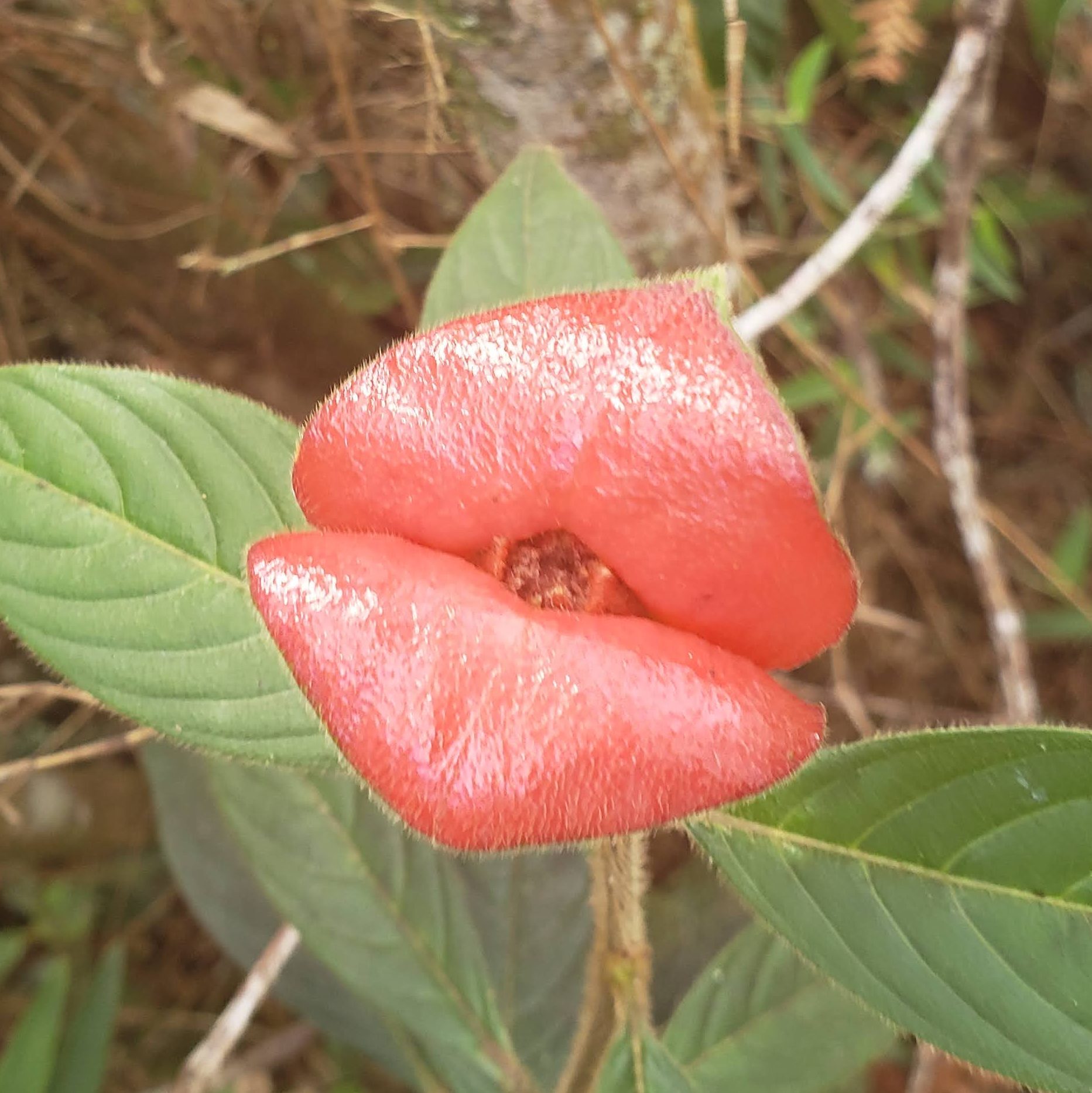
After lunch, we went out onto the lake in a small powerboat for about a 10-minute ride to a small, wooded, uninhabited island for some rest, relaxation, and swimming for those who brought swimwear. The tour guide called it Lip Island after a lip-shaped bloom that grows there. I’m pretty sure they made that up the same time they came up with the apocryphal story of the man who bought the Rock for one peso. Regardless, because the weather was nice, the hour our group had the tiny island to ourselves was really pleasant. Another friend who went with the same tour company a few days prior was not a fan of this part of the trip because the weather was terrible, and the tour guide insisted that they go out on the boat anyway. My friend was wet, cold, and miserable.
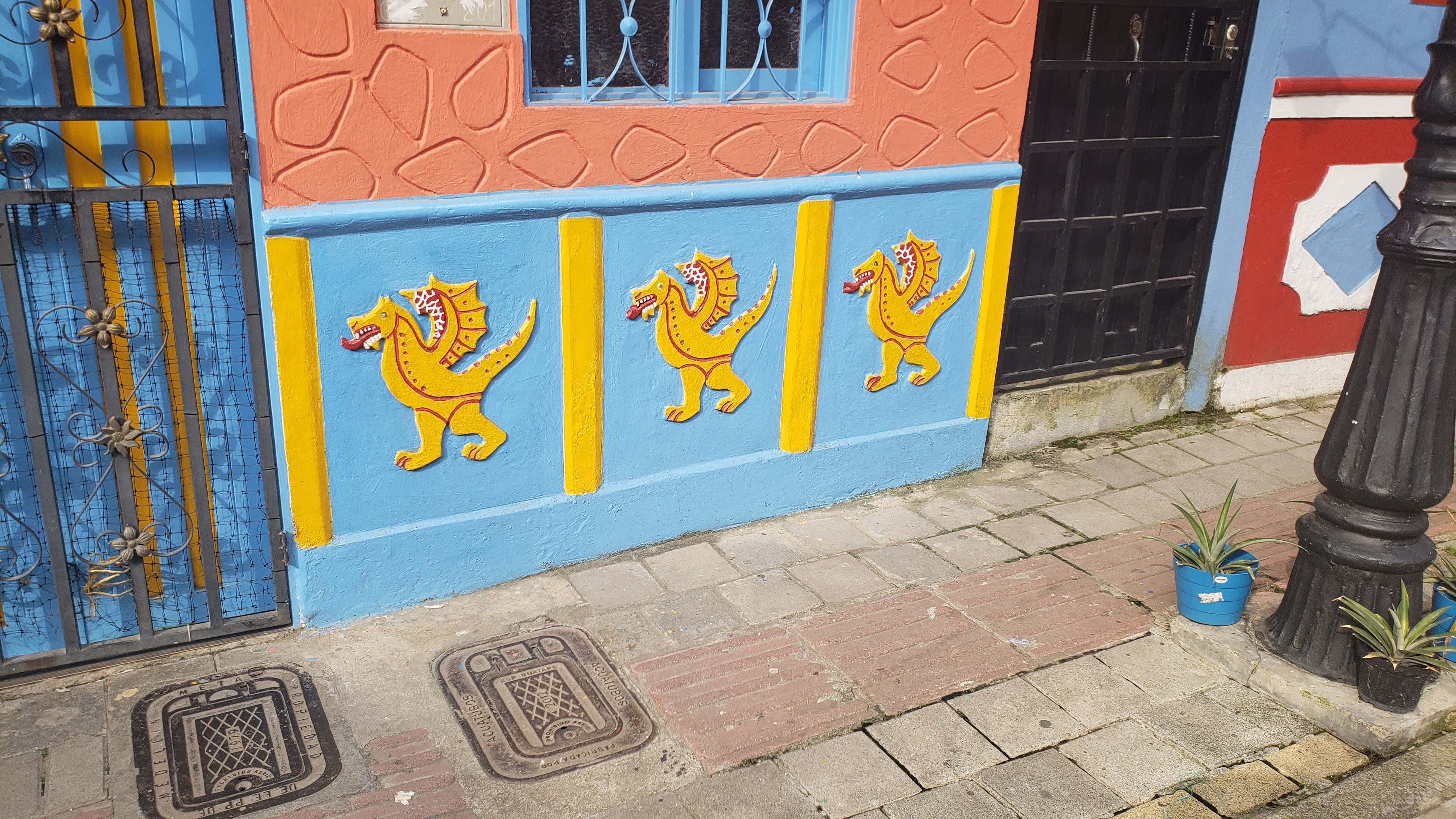
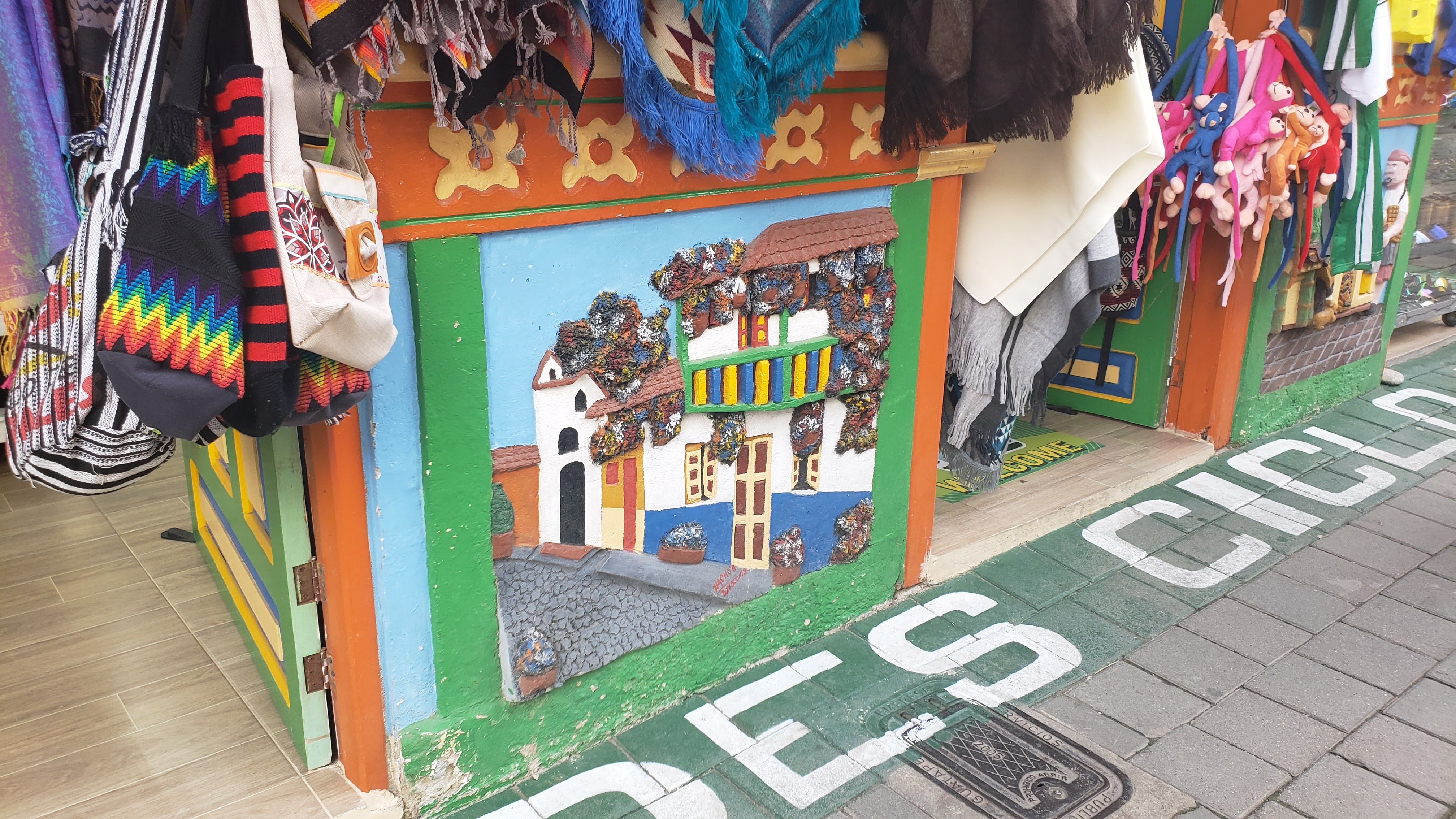
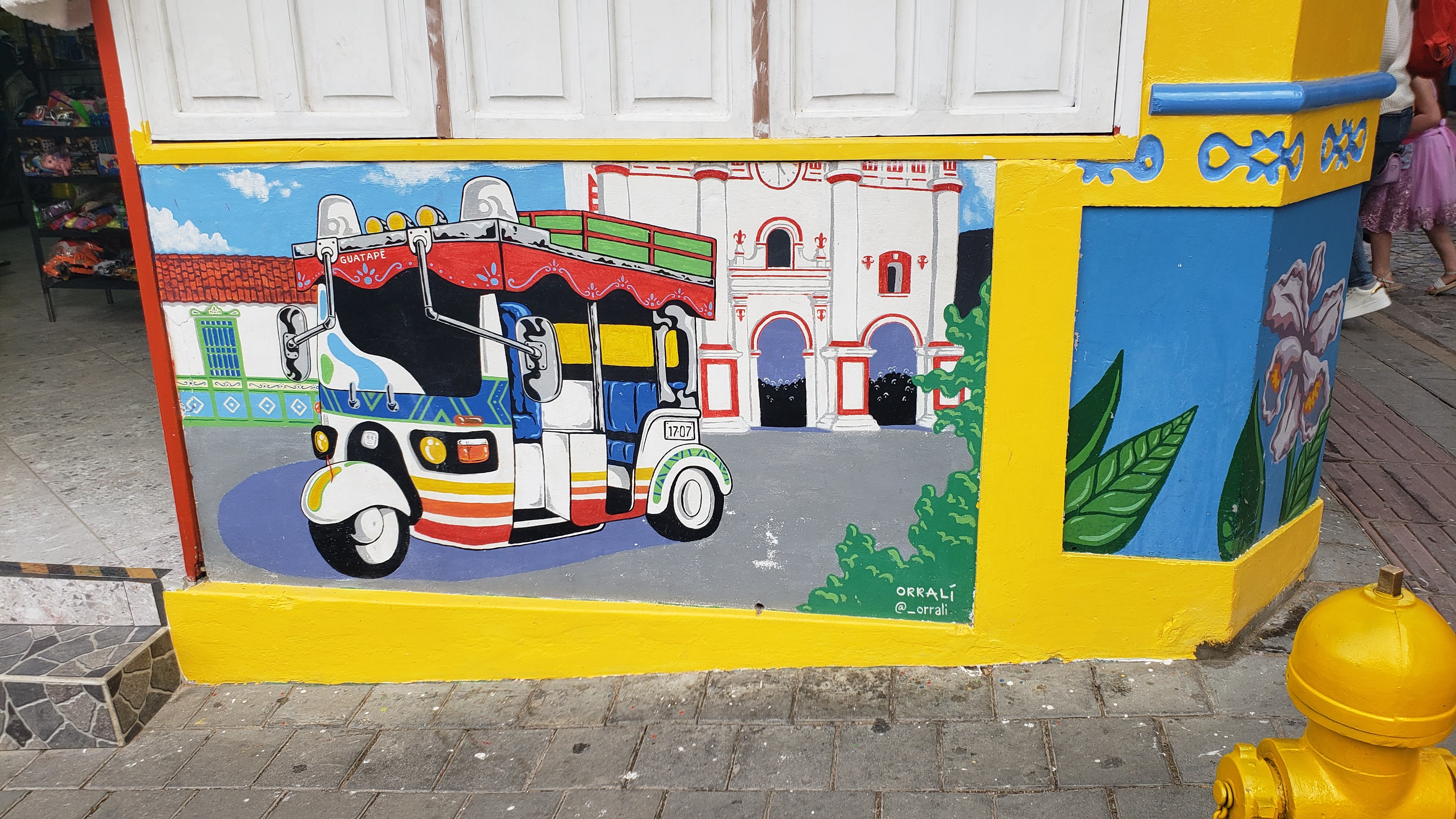
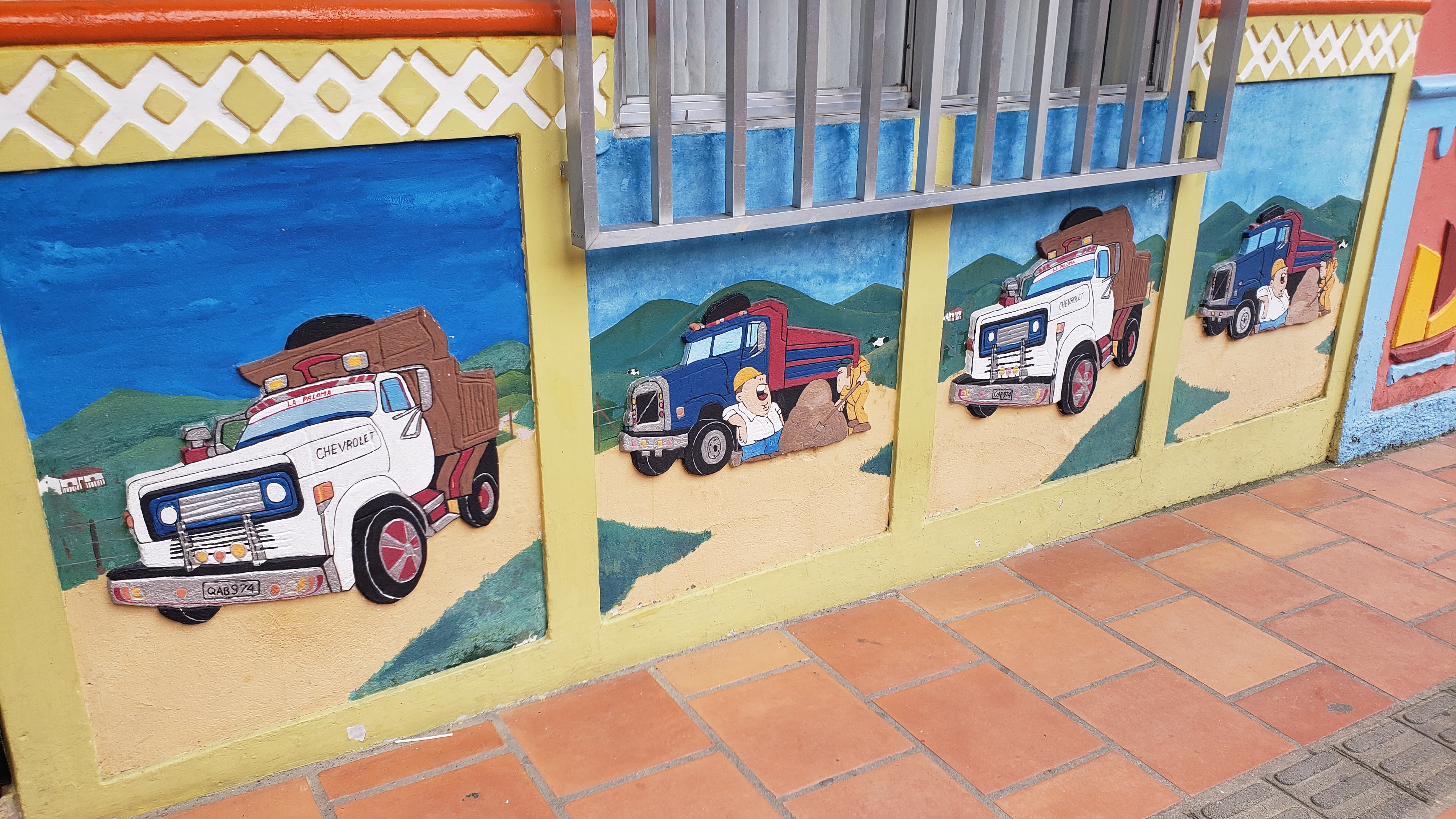
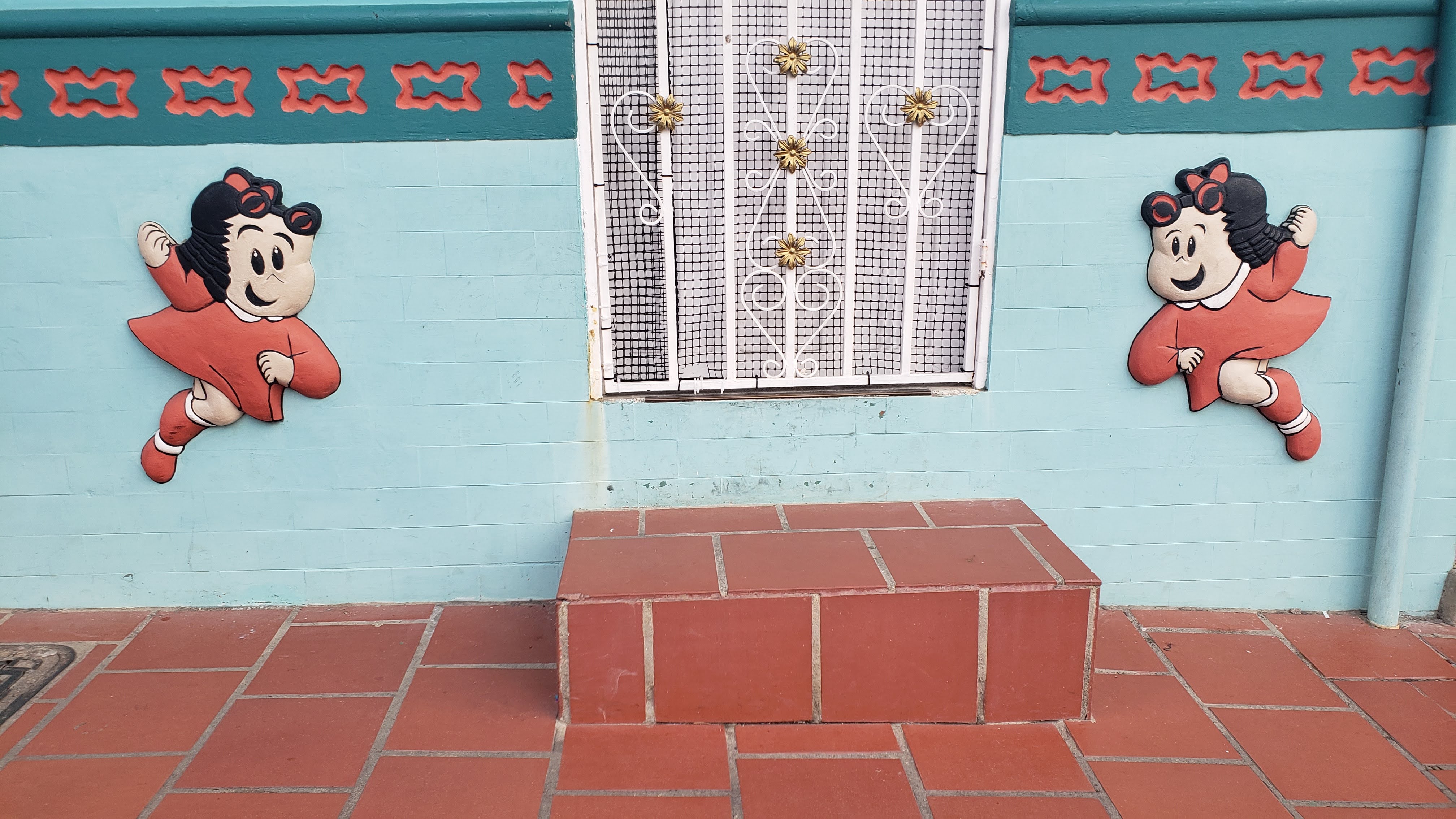
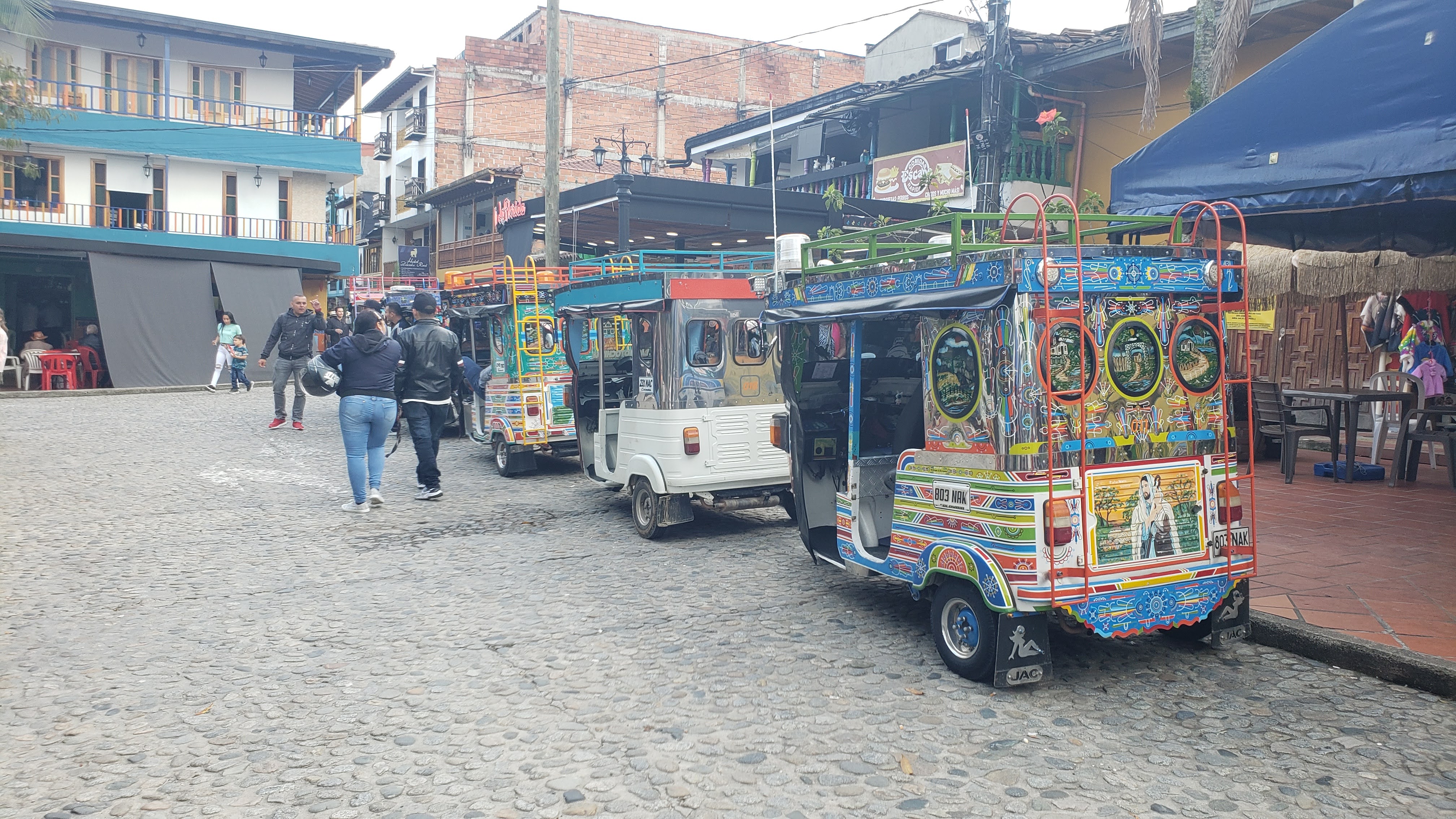
Back on shore, we were taken on a short walking-tour of Guatapé before being given some time to wander on our own. As a highly visual person, I was most excited by the town’s zócolos, colorful, bas-relief additions to the base of the buildings that serve two purposes. They are functional in that they protect the foundations of the earthen structures from rain water, and they are also highly decorative and personalized for each building. They represent either the interests or aesthetic tastes (or both) of the building owner, which makes for a rich diversity of scenes to see. When you add these visual treats to the fact that Guatapé also has brightly colored tuk-tuks, this small town has a charm I find compelling in spite of its touristy feel.







 X Nomad Life