
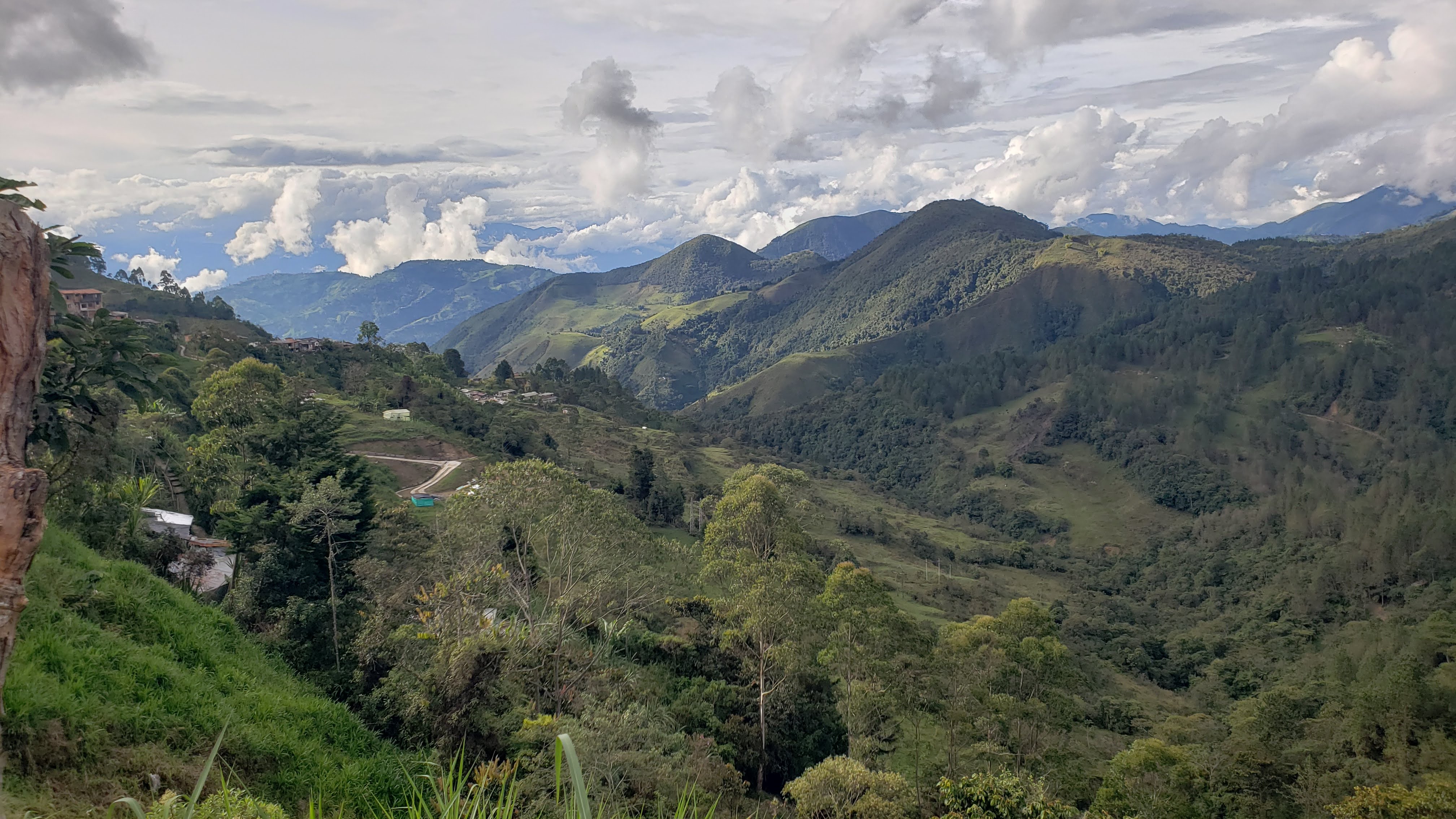
One of the attractions to Medellín for me is the fact that it is set in the mountains. Ever since moving to Colorado after college and seeing the Rocky Mountains for the first time, I’ve been drawn to the dramatic vistas and promise of adventure that living in or near the mountains holds. Medellín is a city that lies between the steep ranges that form the Aburrá Valley. You can’t escape regular views of peaks near and far while in the city, and the valley is surrounded by rolling hills covered in forest and jungle growth.
So, when I decided to come to Medellín, I packed my hiking boots with the hope that hiking would be among the diversions I would be able to access. A small amount of research would have removed any uncertainty about that, but that’s not really how I roll when it comes to travel. I’m usually more of a jump in and figure it out as I go sort of guy. So far that has worked out pretty well, and I think it leaves open more opportunity for serendipity.
Fortunately, that approach worked out in this case as well, and I’ve done three hikes over my two trips to Medellín that I’ll describe below. First, though, let’s talk about some aspects of hiking in Colombia, or at least in the area around Medellín, that I’ve experienced and learned since coming here.
Mud
I don’t know what hiking is like where you are, but I’ve grown accustomed to the dry, rocky trails of Colorado. Sure, we have “mud season” in the spring when mountain snows are melting, but by and large that’s when I avoid going hiking. Even when you do run into some mud on the trail in Colorado, it tends to be for short stretches, and there’s enough clay in the soil that the depth of the muck tends to be limited.
When you go on a hike around Medellín, you need to prepare yourself for the fact that getting muddy it very likely going to be part of the experience. And I’m not just talking about mud on the bottom of your shoes. On my most recent outing, it was shin deep in places.
Unmaintained, unmarked trails
Another aspect of hiking in Colorado and elsewhere in the U.S. that I’ve taken for granted is the work that goes into the national and state forest and park trail systems to make them navigable. In all likelihood, that fork in the trail 8 miles from the trailhead in the U.S. will have a sign helping you take the correct route, and it’s not unusual at all to find trail reinforcements or other improvements made my forest service personnel or volunteer maintenance crews in the seemingly most remote of places.
That is not how things work in Colombia.
To begin, none of the hikes I’ve done so far have had what might be considered a proper trailhead. Two have involved being dropped off on the side of the road at what seemed like a completely random spot, and one began with a hidden trail out of a public athletic field high above the city center. Once on the trail, signage was non-existent, and sometimes the “trail” was actually just a wander through a remote farmer’s hillside field from one side to the other while being watched by cows, horses, and the occasional barking dog before picking up a narrow path again.
Switchbacks? What switchbacks?
Virtually any steep ascent or descent in the U.S., with the possible exception of the final scramble over the talus at the top of a Colorado 14er, is characterized by a series of switchbacks that serve to reduce the angle of ascent and help to prevent erosion. In Colombia, neither you nor the mountain can depend on such pampering.
Straight up or straight down is a possibility to be prepared for in hikes around Medellín. When combined with the possibility of mud, a hiking stick or pole has never felt like a more practical accessory to take along.
Bandits
It happens. The combination of extreme poverty, decades of civil unrest, and remote terrain provides motivation, means, and opportunity for hikers to be robbed at gunpoint while out on the trail. I haven’t personally experienced that situation, but it’s a real risk to be taken seriously.
The rules to protect yourself are simple.
- Take only what you need, leaving valuables at home.
- Know where you are going, or better yet, go with a group and a guide who knows what areas to avoid. This is also great advice considering the unmarked trails, and hiking groups you can join for a small trip fee to cover transportation and a little something for the guide are abundant. Start by checking out the Medellín Hiking Group on Facebook for lots of options.
- Consider buying and taking a cheap phone that you don’t mind losing on hiking trips. This isn’t bad advice for a night out in Provenza or anytime you’re going to be in a big crowd either. I confess I have yet to follow this advice, but I did lose one phone here to a pick-pocketer on a busy MetroCar ride.
- If faced with this situation, hand over whatever you have without a fight. These bandits are poor people taking advantage of a situation, not looking to do you real harm. Don’t give them a reason.
Three hikes
Over my two trips to Medellín, I’ve had the pleasure of participating in three hikes. Two have been with the Kinkaju Hikes & Adventures, a side gig by an American guy named Jack who leads hikes around Medellín when not performing his day job – leading cycling and other trips as a travel guide in the United States and Central America. Jack’s trips are great because they attract a combination of visitors and locals, creating a great opportunity for language exchange while on the trail. The other was with DeAventura, a more locals-oriented group that also welcomes any gringos who happen to sign up. I highly recommend both.
Angelópolis
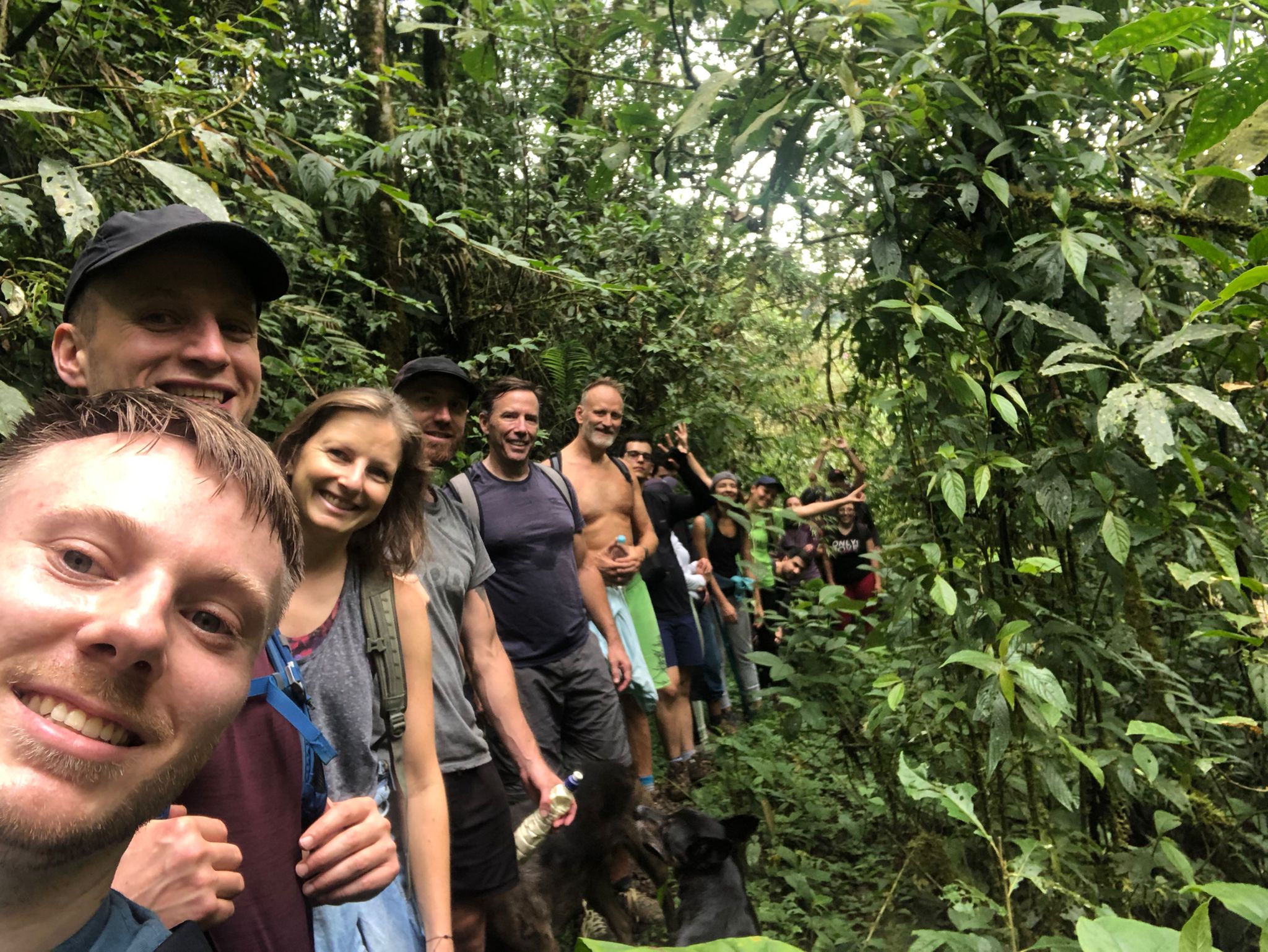
This trip with Jack from Kinkaju was my initiation into hiking in Colombia, and I confess that at first I wasn’t sure if I’d like it. We crammed 14 people into a small van for a 2-hour drive south out of Medellín through the town of Caldas. When we then stopped seemingly in the middle of nowhere with no trail visible from the road, I wondered what I’d gotten myself into. Then the hike began up a trail with more mud on it than I’d ever considered hiking through, although I’d later see much more mud on my third hike. I wasn’t sold.
Then I decided to settle in. No one else seemed bothered by the mud, and the conversation was pleasant. After a while, the mud subsided (we would find more later), and we eventually made our way to a remote waterfall. Many of my fellow hikers stripped down and enjoyed a sketchy climb up the lower tier of the waterfall. I opted for using my raincoat as a tarp to sit on a wet rock for some open-eyed nature meditation and a snack.
The second half of the hike was relatively, but far from completely, dry and ended with a couple of kilometers up a dirt road to the hilltop town of Angelópolis where we had the opportunity to enjoy a cold beer before the ride back to Medellín. By the time it was over, my initial hesitation was past, and I knew I’d be doing more hiking around Medellín.


Cascada de Espadera
Upon my return to Medellín in January, I immediately started looking for a hiking group to join. Kinkaju didn’t have anything going that first weekend, so I ended up registering with DeAventura. Their normal procedure is to pay in advance via a Bancolombia transfer. That only works if you have a local account, though, and they were very accommodating, allowing me to bring cash the morning of the hike. Unlike Kinkaju’s trips, this one was not bilingual although there happened to be several people in the group who spoke English. Your mileage may vary on that good fortune. But no matter. You don’t need to speak the language to play follow the leader.
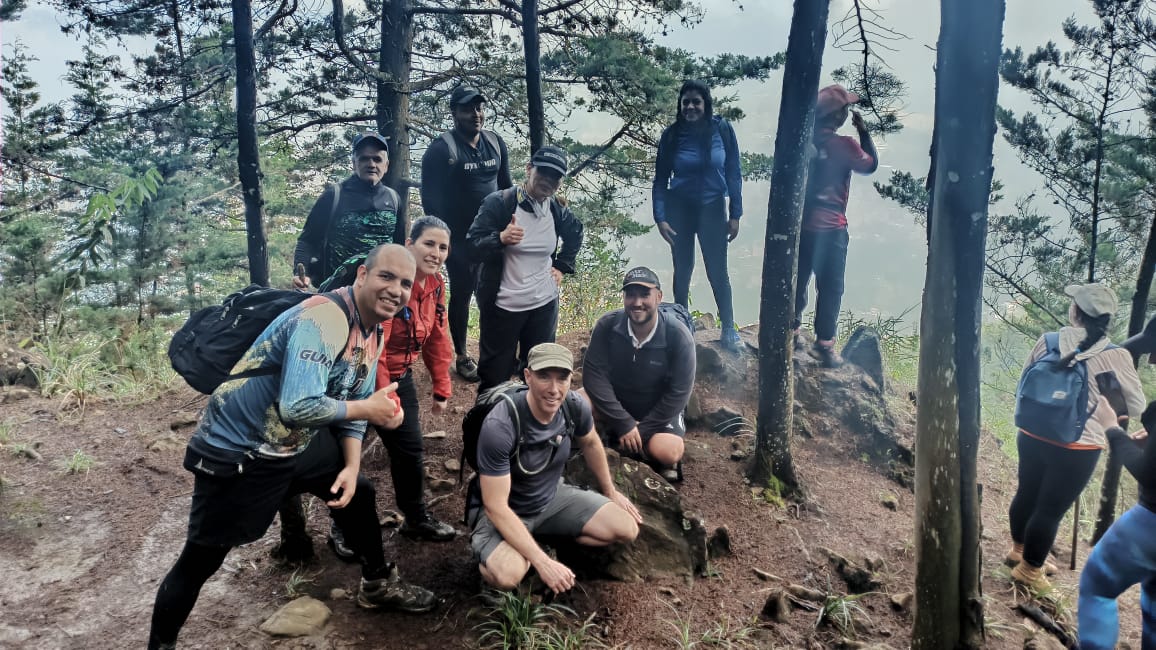
This one was much closer to the city, and we were able to use public transportation to get to and from the trail. After taking a bus up from the Estación San Antonio to a neighborhood public park, we followed a slick, unmarked trail straight up to a gravel road and then through a peaceful forest before finding a narrow trail through the jungle. The descent down to the waterfall was treacherous. Muddy and steep, I could only navigate it using trailside trees as support to keep from tumbling. Those action scenes in movies set in the jungle where someone goes sliding hundreds of yards downhill before splashing into a river suddenly seemed all too plausible.
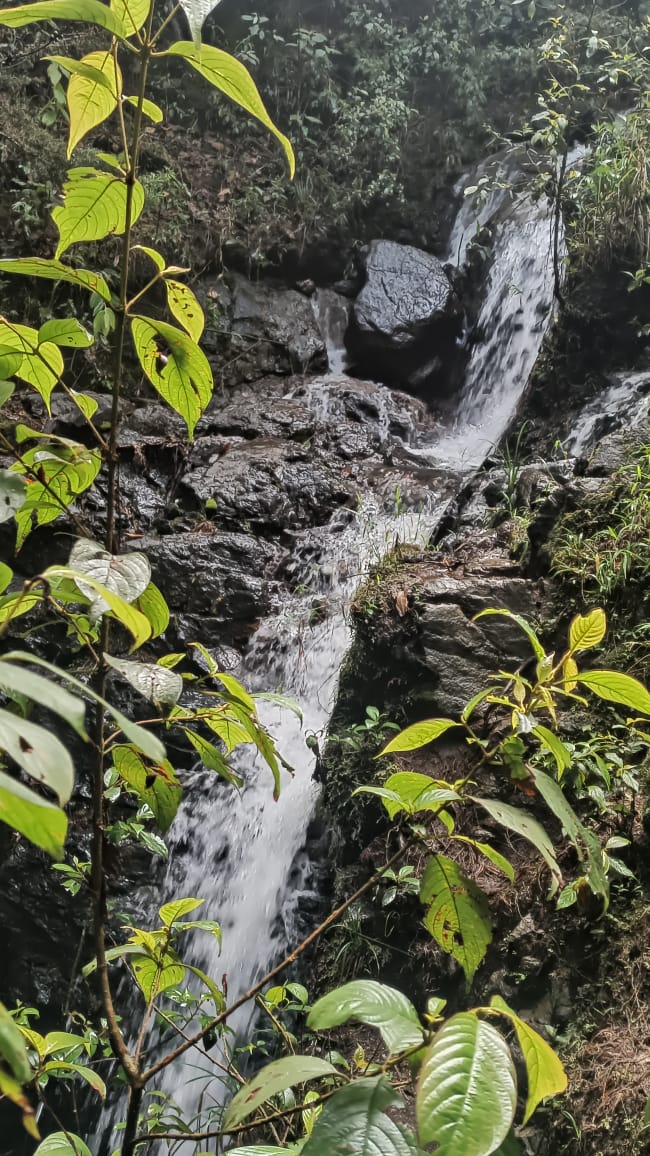
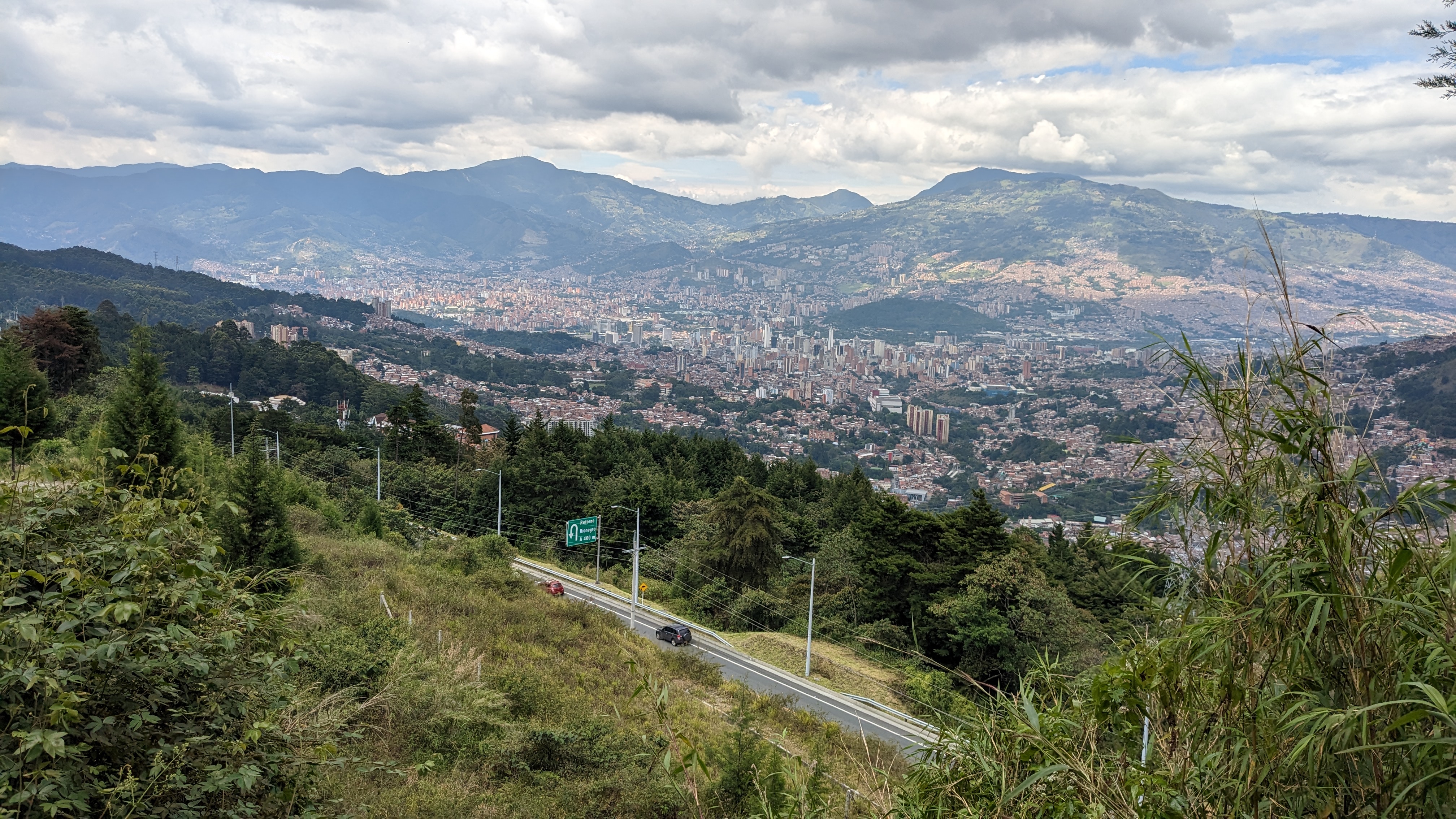
The waterfall (Cascada de Espadera) itself was beautiful, and there was once again the opportunity to strip down and enjoy a shower for those who were interested. Afterwards, the hike back down to where we could pick up public transit afforded beautiful views of the city below.




Río Santo Domingo
The following weekend, I signed up for another hike with Jack at Kinkaju and was thrilled to see that he had rented a much larger and more comfortable bus for the 2.5 hour trip to the trailhead compared to the glorified minivan we were in on my first trip with him. Another through hike, this one again started on the side of the road with an easy descent down a gravel road before immediately getting super wet and muddy as we reached the flatland. I spent the first bit gingerly making my way from mound to mound, trying to keep the level of the mud below the top of my below-the-ankle hiking boots.
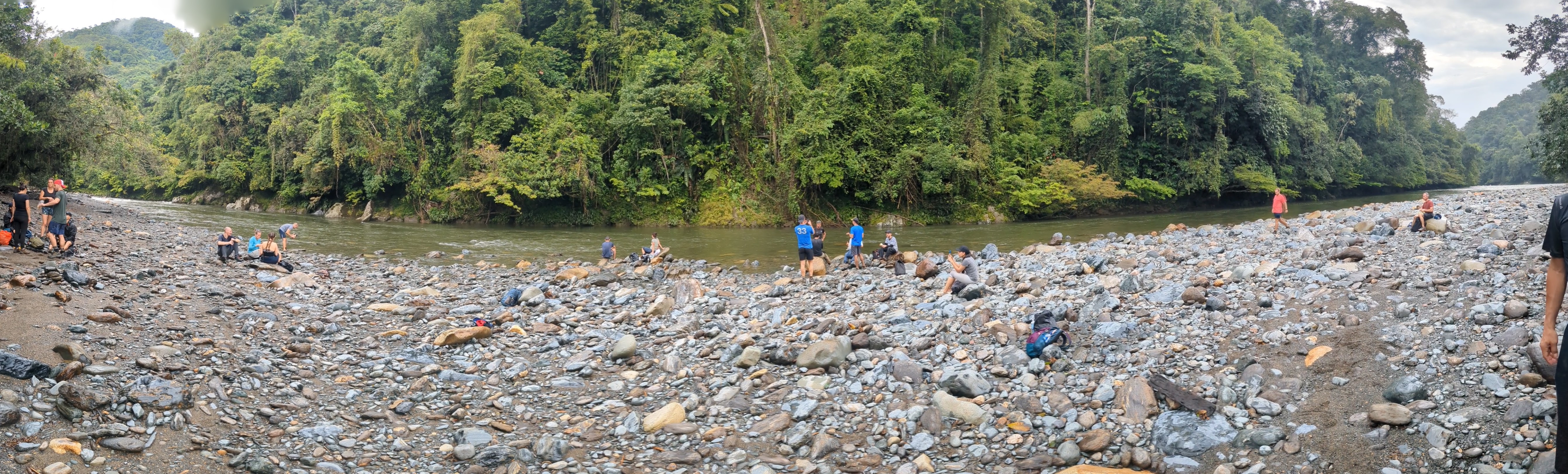
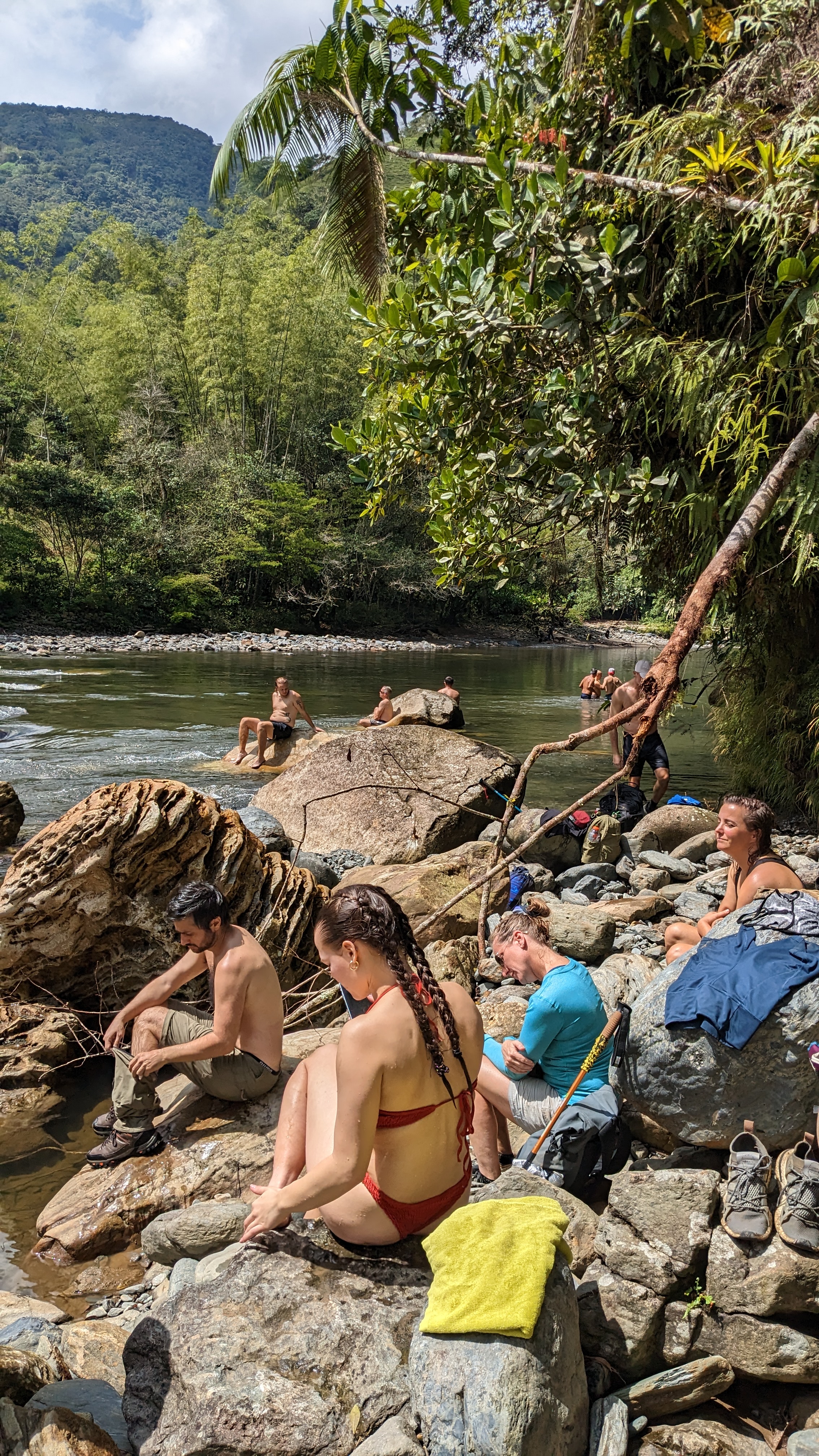
My disappointment as that first bit of water breached the top of my boot would soon prove to be just the beginning. No more than a mile into the hike, we forded a knee-deep stream, and I’ve never been happier to be wearing wool socks. The “trail” eventually made its way across a bouncy suspension bridge and along the river to an area where we stopped for a rest and a snack. We continued roughly along the river through a trail section with a steep sideways slope. Someone had strung a metal cable along the worst parts of the trail that provided some degree of protection from sliding into the jungle, but I was pretty envious of the woman behind me with her sturdy hiking pole.
After a stop for a swim and lunch, the trail went basically straight uphill out of the canyon through a combination of trail, farmers’ fields, and washes that I’d guess would be impassible in a rain. Along one section, a mudslide had taken out the trail in the few days since Jack scouted it in preparation for the group hike. The mud was soft and deep, but Jack and one of the more experienced hikers strung a rope that helped with the crossing.The climb out of the canyon was rewarded with a brief rest and a couple of beers in the town of La Piñuela before a change of socks and dry shoes for the trip back to Medellín.




 X Nomad Life