

My name is Brennon, and I’m addicted to going to the Olympics.
I think it started when I got my first taste of glory in sporting activties. I was born a talented kid. I was fast. Really fast. No one could catch me in a short-distance race when I was young. I first demonstrated my fleet feet on the playground and then very early on between the bases of a baseball diamond. My natural-born talent included the ability to throw the ball hard and on target, which made me a fearsome pitcher to face. My hand-eye coordination made me a hitter that made opposing pitchers also take notice. Once I was on base, successfully stealing the next was always a possibility. I ended up with a pile of game balls awarded to me by grateful little league coaches in addition to a shelf full of all-star trophies.
In fifth grade, my mother’s second marriage to a man in a higher tax bracket than what we had previously experienced landed me in a private school with a complement of teams in football, basketball, and track. The first year of football, I quit the team after a couple of weeks because I couldn’t take the work involved and became the team manager instead, fetching towels and water for the players. The coach later admitted to me and my parents that he was so delighted with how fast I ran and my ability to avoid getting tackled that he had simply overdone it at practice, having me run every play. When basketball season started, I made the team but played second string. That game requires skills I have never developed.
Then came track season, and I blew away the field in the 50, 100, and 200-yard dash. Every race. No one could really even come close to matching my times. I could also jump far and set a school record in long jump. In my 11-year-old mind, an Olympic medal while on leave from playing pro baseball was absolutely within reach.
The following year in sixth grade I played football, scored a ton of touchdowns, and continued to think my destiny as a champion was my inevitable birthright. I mostly rode the bench during basketball season, playing respectable defense and unsuccessfully trying not to panic when the ball came my way when I did make it onto the court.
And during all that time between track seasons, a kid named Chris Runyon was doing his thing at another school. And going through puberty. And apparently working hard.
You can imagine my surprise when, at the end of the first race of the season, I found Chris Runyon had left me in the dust. And then he had audacity to do it every race, all year. As I recall, his margin of victory kept growing. And worst of all? He was a super nice guy and never once gloated or rubbed it in my face. I had beaten him every race the year before, and he returned the favor in sixth grade in the most sportsmanlike way. What a jerk, amiright? 😆
My real glory days were behind me. I never worked hard enough to catch up to the best competitors again – in track or in baseball. My baseball career ended at 15, but I continued to run track through high school including participation on a summer team with Chris in the AAU Junior Olympics series. We had a decent 4×100 relay team that usually allowed us to contend well enough to make it to the finals, but we never medaled. We did have the distinction of being a crowd favorite at one event deep in the heart of Georgia because we made it to the finals with three white kids on our relay team, but I had to let go of the idea that I would one day wear my own Olympic gold.
Nevertheless, I stayed a fan of the Games, both summer and winter, and watched the competitions every four years on TV from afar. Then it was announced that the Winter Games would be held in Salt Lake City in 2002. By that time I was out of grad school working in tech and making decent money so I bought event tickets, made travel plans, and attended my first Olympics. I was living in San Francisco at the time so the investment was manageable.
I loved it. The experience wasn’t without its challenges – unexpected travel hiccups, event access logistical nightmares – but I loved it. The first event I saw was ski jumping, the one where the jumper goes straight down a long ramp in a tuck position and then hurls himself off the end, landing waaaay down a steep hill.
What struck me about the experience was not just the skill of the competitors but the sportsmanship of the crowd. Sure, people cheered a bit harder for competitors from their home country, but everyone cheered for everyone. There was an acknowledgment of how special it was for each and every person who donned a competitor bib to be there, and that in itself was worth applause.
After Salt Lake, some years passed, and I found myself living in Seattle and making plans to attend the Winter Games in Vancouver in 2010. Again, logistical challenges (weather, 2-hour bus rides to a venue, the strange Canadian definition of how few people a city bus will hold before it’s deemed full) threatened but failed to spoil the trip. Yes, one of the snowboarding events was delayed a few hours due to rain, but the lively conversation with people from around the world as we all waited it out in a shelter more than made up for the inconvenience.
That experience waiting out the rain is what cemented my addiction to attending the Games. I’ve said it countless times: Going to the Olympics gives me hope for the world. It shows me that when governments and religions get out of the way, everyone gets along just fine. Sure, the Olympics are highly politicized as I’ve been reminded many times. But none of the athletes nor attendees could care less about that. The Games are an inter-cultural, not just multi-cultural, celebration of sport and the dedication 99.9999% of the competitors make to get there. The shooter from Turkey in Paris this year is a glorious exception to that rule. Unfortunately, I already know I’m not a “natural shooter” like Yusuf Dikeç so my medal dreams remain at bay.
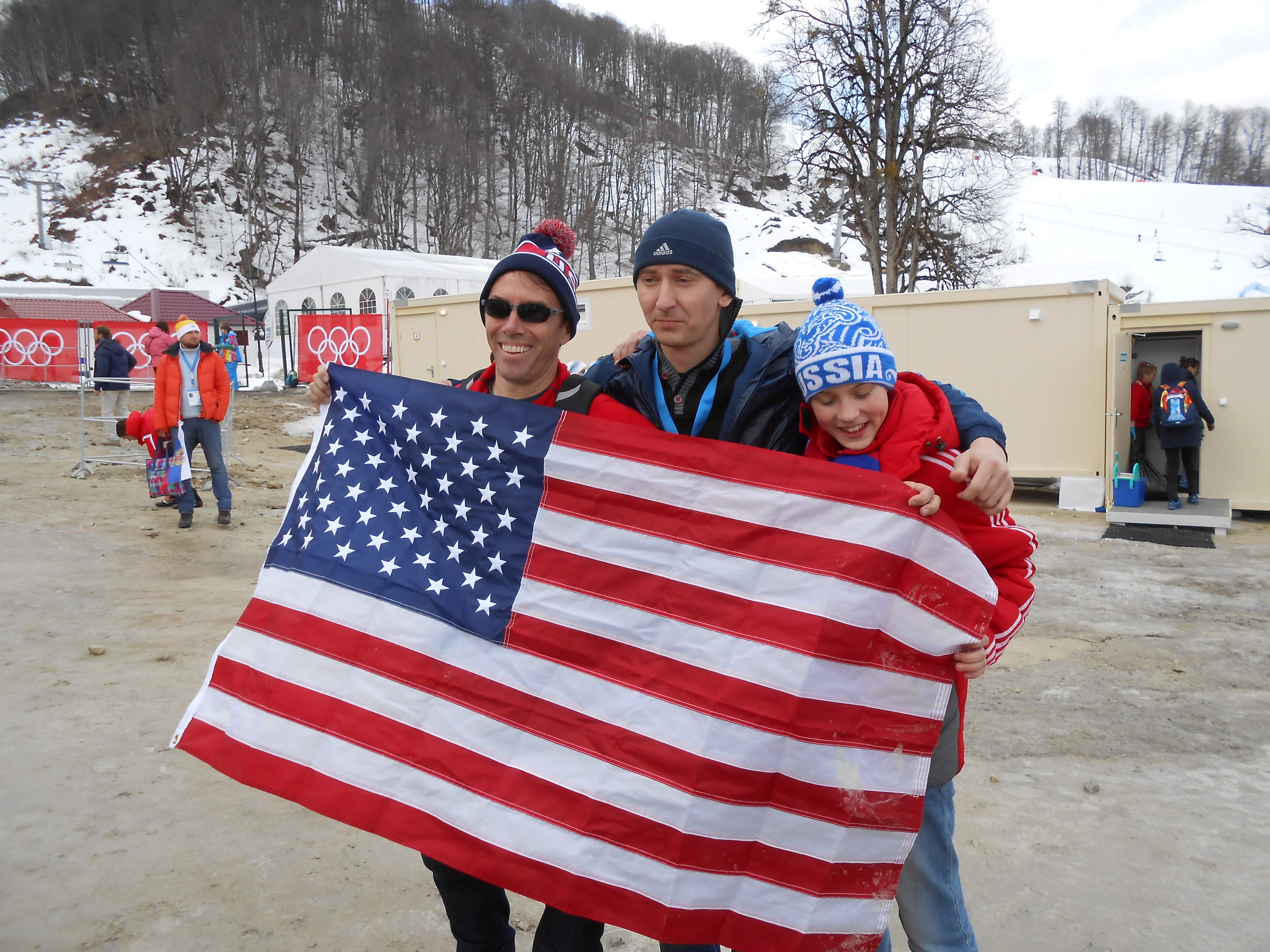
While in Vancouver, I saw the model of the venues to be constructed in Sochi, Russia, and decided to plan my first trans-oceanic Olympic journey. Those games received a lot of negative press in the U.S., but my experience could not have been better. Not only were the logistics handled extremely well, but the Russian people were incredibly warm and welcoming to the very few Americas in attendance. During one 3-hour break in the action between runs of a downhill ski race, I posed for dozens upon dozens of photos with locals proudly displaying my American flag. There was literally a line of people waiting their turn.


Then came Pyeongchang, South Korea, where the logistics were the worst I have experienced, a title previously held by Salt Lake City. As an example, the experience involved riding trains between several cities within Pyeonchang county to attend various events. At the train station, they created a big map to provide information about how to get from the station to the venues, but IT WAS ONLY IN KOREAN. There are other examples, but suffice it to say they simply didn’t think through the details of handling so many visitors from around the world.
As I write this post, I am privileged to be sitting at a sidewalk table at a cafe in the City of Light. OK, I admit it; I’m at a Starbucks. I don’t drink coffee (another travel story for another time); I like chai lattes, I wanted wi-fi, and Starbucks is reliable for both around the world. I see you judging me, and I don’t care.
Anyway, attending my first Summer Games in Paris has been fantastic so far. I’m only one event in to my schedule of four over the course of 10 days, but the French seem to have nailed the logistics. More to come on the 2024 Summer Olympics in a future post.
USA! USA!
 X Nomad Life